Getting Super Street Fighter II Turbo to run properly on a 1990s PC felt like a miracle, but once the CD audio kicked in, arcade purists realized DOS finally had a fighter that could hold its ground.
For years, playing arcade fighting games on a home computer meant accepting tragic trade-offs. Extra frames of animation vanished, hitboxes became unpredictable, and sound effects were reduced to harsh bleeps through the internal PC speaker. When Capcom Co., Ltd. licensed British studio Eurocom to build a PC port for publisher GameTek, Inc. in 1995, expectations among keyboard combatants were cautious at best.
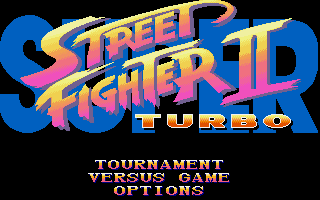
What landed on store shelves in 1995 surprised almost everyone who had suffered through earlier, truncated conversions. By building the port around the 32-bit Borland DOS Extender, Eurocom preserved the arcade game's snappy execution, fluid character motion, and sharp side-view graphics. Instead of feeling like a watered-down imitation, the Super Street Fighter II Turbo MS-DOS game captured the heavy weight of every kick and the precise timing required for fireballs.
The step forward was obvious when compared directly to contemporary computer ports of rival fighters. While PC editions of other arcade hits suffered from floaty physics or clumsy keyboard mappings, this release maintained the exact tempo that competitive arcade players expected. Magazine writers at the time noted that it easily outmatched competing DOS conversions like Mortal Kombat II, giving PC owners a legitimate competitive fighter that did not compromise on feel.
Sitting down with the game throws you straight into a gauntlet of 12 global opponents, culminating in four notorious boss encounters:
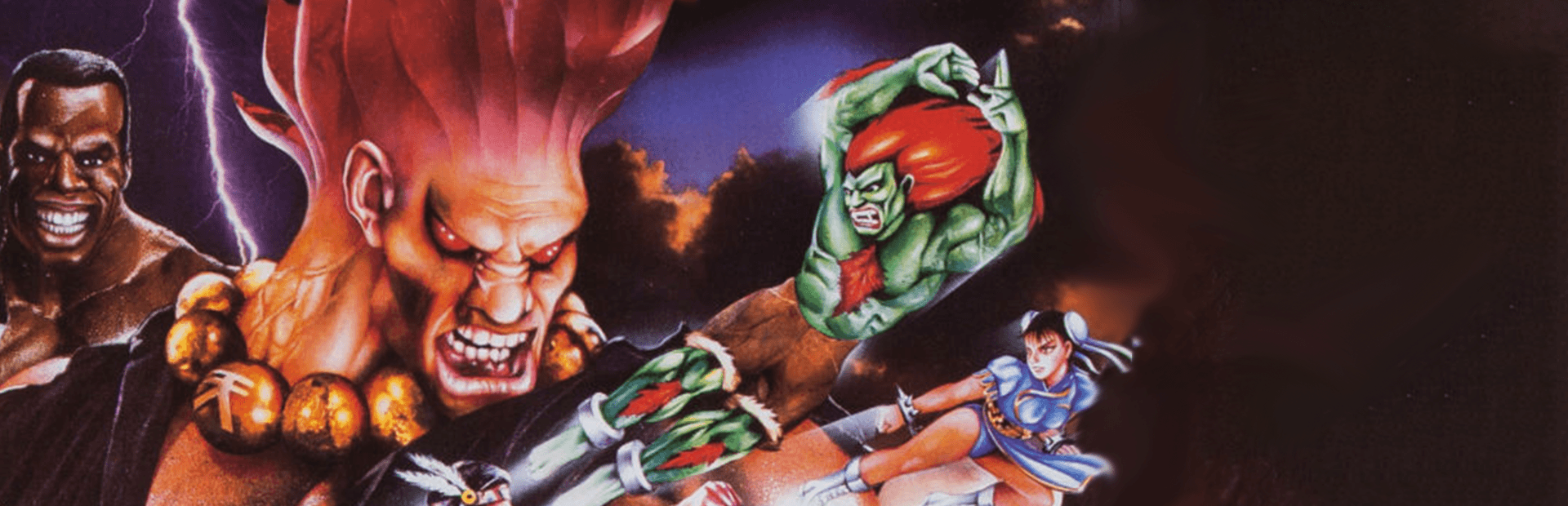
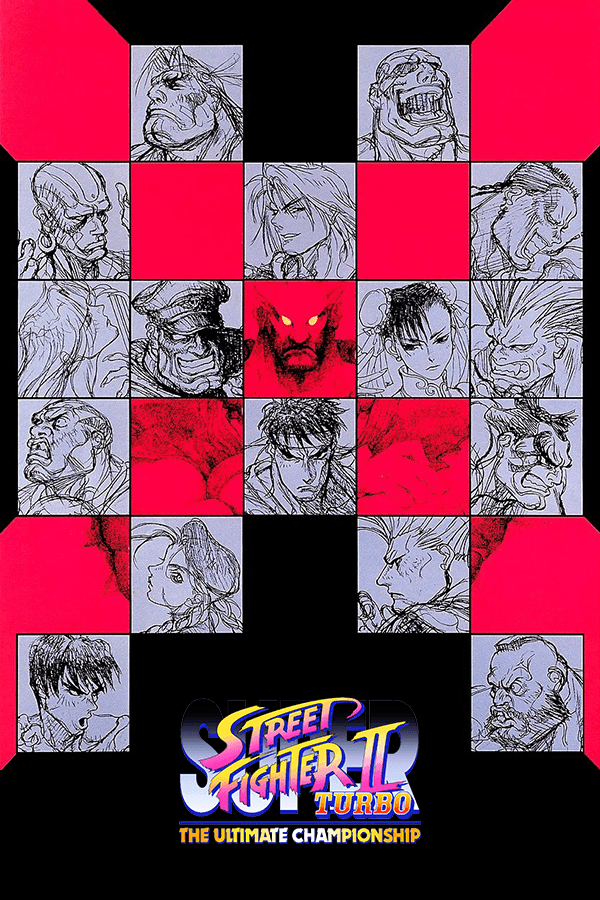
The core roster expands the classic lineup to 16 playable fighters by adding the four New Challengers: Cammy, Fei Long, Dee Jay, and T. Hawk. More importantly, this revision introduced mechanics that altered high-level play forever. By landing attacks and taking hits, you fill a Super Gauge at the bottom of the screen. Unleashing a Super Combo at full meter delivers massive damage, capable of turning a losing round around in two seconds. Air combos also entered the mix, rewarding players who could catch opponents mid-jump.
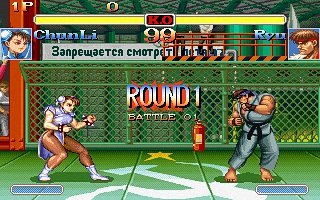
Where the DOS version stings is its unforgiving artificial intelligence. The computer opponents do not merely react to what you do; they read your raw button inputs on the exact frame you press them. Try to sweep the AI from across the screen, and it will respond with a frame-perfect Dragon Punch before your animation even fully starts. If your CPU cycle rate in DOSBox is configured too high, the simulation runs out of control, turning the opponent into an unstoppable machine that counters every jab instantly.
Early buyers who bought the game on floppy disks noticed several missing background animations and a few bizarre arcade difficulty bugs. Eurocom addressed those launch issues directly with Patch 1.5, which restored omitted background sprite frames and adjusted CPU behaviors. Getting that patch was a rite of passage, usually requiring a slow download from a bulletin board system or a magazine cover disc.
The code entries hidden inside the character select screen are famous among arcade fans. By entering specific button combinations on a character, you can pick their "Old" variant from Super Street Fighter II. These alternate versions forfeit access to the Super Gauge and air escape options, but in exchange, they gain higher raw attack damage and classic special move timings. I always preferred picking Old Sagat just to wallop computer opponents with his terrifyingly fast high-and-low projectile patterns.
The ultimate secret remains Akuma, known as Gouki in Japan. Reaching him naturally as an unplayable final boss requires fighting through the arcade mode without losing a single round, where he drops in to obliterate M. Bison before turning his rage on you. Players who learned the elaborate sequence of selection screen highlights could unlock Akuma as a playable character, instantly dominating any local match with his air fireballs and teleport maneuvers.
To enjoy the full visual fidelity of Super Street Fighter II Turbo back in 1995, your rig needed at least 16 megabytes of RAM. Computers running on 8 megabytes had to disable animated background elements, turning lively crowds into static backdrops. On older machines running 32-bit Windows operating systems like Windows 98, players frequently wrestled with DPMI memory extender crashes, making pure MS-DOS mode the only stable way to play.
Sound card selection made a massive difference to the atmosphere. While standard Sound Blaster support provided punchy combat audio, players with General MIDI synthesisers or CD-ROM drives enjoyed an incredible audio presentation. Eurocom utilised Red Book CD Audio to deliver fully arranged studio tracks for every stage. Hearing Guile's theme blasting through a decent set of desktop speakers rivaled the sound output of any arcade cabinet in the country.
Decades after its release, this conversion shows how to port complex arcade hardware to home computers properly. The frame data stays tight, the sprite work holds its clarity, and the remixed CD audio soundtrack keeps the energy high throughout every match. The brutal AI input reading will still test your patience, but landing a perfect combo to seal a close round feels just as rewarding as it did on arcade hardware.
You can play Super Street Fighter II Turbo online free in your browser right now with nothing to install. Jump straight into the character select screen, input the classic code for an Old character, and test your execution against Sagat in the ultimate 1v1 showdown.
Getting Super Street Fighter II Turbo to run properly on a 1990s PC felt like a miracle, but once the CD audio kicked in, arcade purists realized DOS finally had a fighter that could hold its ground.
For years, playing arcade fighting games on a home computer meant accepting tragic trade-offs. Extra frames of animation vanished, hitboxes became unpredictable, and sound effects were reduced to harsh bleeps through the internal PC speaker. When Capcom Co., Ltd. licensed British studio Eurocom to build a PC port for publisher GameTek, Inc. in 1995, expectations among keyboard combatants were cautious at best.
What landed on store shelves in 1995 surprised almost everyone who had suffered through earlier, truncated conversions. By building the port around the 32-bit Borland DOS Extender, Eurocom preserved the arcade game's snappy execution, fluid character motion, and sharp side-view graphics. Instead of feeling like a watered-down imitation, the Super Street Fighter II Turbo MS-DOS game captured the heavy weight of every kick and the precise timing required for fireballs.
The step forward was obvious when compared directly to contemporary computer ports of rival fighters. While PC editions of other arcade hits suffered from floaty physics or clumsy keyboard mappings, this release maintained the exact tempo that competitive arcade players expected. Magazine writers at the time noted that it easily outmatched competing DOS conversions like Mortal Kombat II, giving PC owners a legitimate competitive fighter that did not compromise on feel.
Sitting down with the game throws you straight into a gauntlet of 12 global opponents, culminating in four notorious boss encounters:
The core roster expands the classic lineup to 16 playable fighters by adding the four New Challengers: Cammy, Fei Long, Dee Jay, and T. Hawk. More importantly, this revision introduced mechanics that altered high-level play forever. By landing attacks and taking hits, you fill a Super Gauge at the bottom of the screen. Unleashing a Super Combo at full meter delivers massive damage, capable of turning a losing round around in two seconds. Air combos also entered the mix, rewarding players who could catch opponents mid-jump.
Where the DOS version stings is its unforgiving artificial intelligence. The computer opponents do not merely react to what you do; they read your raw button inputs on the exact frame you press them. Try to sweep the AI from across the screen, and it will respond with a frame-perfect Dragon Punch before your animation even fully starts. If your CPU cycle rate in DOSBox is configured too high, the simulation runs out of control, turning the opponent into an unstoppable machine that counters every jab instantly.
Early buyers who bought the game on floppy disks noticed several missing background animations and a few bizarre arcade difficulty bugs. Eurocom addressed those launch issues directly with Patch 1.5, which restored omitted background sprite frames and adjusted CPU behaviors. Getting that patch was a rite of passage, usually requiring a slow download from a bulletin board system or a magazine cover disc.
The code entries hidden inside the character select screen are famous among arcade fans. By entering specific button combinations on a character, you can pick their "Old" variant from Super Street Fighter II. These alternate versions forfeit access to the Super Gauge and air escape options, but in exchange, they gain higher raw attack damage and classic special move timings. I always preferred picking Old Sagat just to wallop computer opponents with his terrifyingly fast high-and-low projectile patterns.
The ultimate secret remains Akuma, known as Gouki in Japan. Reaching him naturally as an unplayable final boss requires fighting through the arcade mode without losing a single round, where he drops in to obliterate M. Bison before turning his rage on you. Players who learned the elaborate sequence of selection screen highlights could unlock Akuma as a playable character, instantly dominating any local match with his air fireballs and teleport maneuvers.
To enjoy the full visual fidelity of Super Street Fighter II Turbo back in 1995, your rig needed at least 16 megabytes of RAM. Computers running on 8 megabytes had to disable animated background elements, turning lively crowds into static backdrops. On older machines running 32-bit Windows operating systems like Windows 98, players frequently wrestled with DPMI memory extender crashes, making pure MS-DOS mode the only stable way to play.
Sound card selection made a massive difference to the atmosphere. While standard Sound Blaster support provided punchy combat audio, players with General MIDI synthesisers or CD-ROM drives enjoyed an incredible audio presentation. Eurocom utilised Red Book CD Audio to deliver fully arranged studio tracks for every stage. Hearing Guile's theme blasting through a decent set of desktop speakers rivaled the sound output of any arcade cabinet in the country.
Decades after its release, this conversion shows how to port complex arcade hardware to home computers properly. The frame data stays tight, the sprite work holds its clarity, and the remixed CD audio soundtrack keeps the energy high throughout every match. The brutal AI input reading will still test your patience, but landing a perfect combo to seal a close round feels just as rewarding as it did on arcade hardware.
You can play Super Street Fighter II Turbo online free in your browser right now with nothing to install. Jump straight into the character select screen, input the classic code for an Old character, and test your execution against Sagat in the ultimate 1v1 showdown.
How Super Street Fighter II Turbo is played — the keys the game listens to, grouped by what they do.
Highlighted keys are mapped — hover or tap one to see what it does.
Keyboard inputs can be rebound in the options configuration menu. Joysticks require in-game calibration.
The on-screen keyboard and gamepad mapping the browser player uses on a phone, a tablet or a controller, as opposed to the real keys above. $PRO members make their own in the player and share them here; anyone can pick one to play with.
Cheat codes, console commands and memory pokes for Super Street Fighter II Turbo — each one verified and attributed.
Sign in to submitHow Super Street Fighter II Turbo is played — the keys the game listens to, grouped by what they do.
Highlighted keys are mapped — hover or tap one to see what it does.
Keyboard inputs can be rebound in the options configuration menu. Joysticks require in-game calibration.
The on-screen keyboard and gamepad mapping the browser player uses on a phone, a tablet or a controller, as opposed to the real keys above. $PRO members make their own in the player and share them here; anyone can pick one to play with.
Cheat codes, console commands and memory pokes for Super Street Fighter II Turbo — each one verified and attributed.
Sign in to submit
