
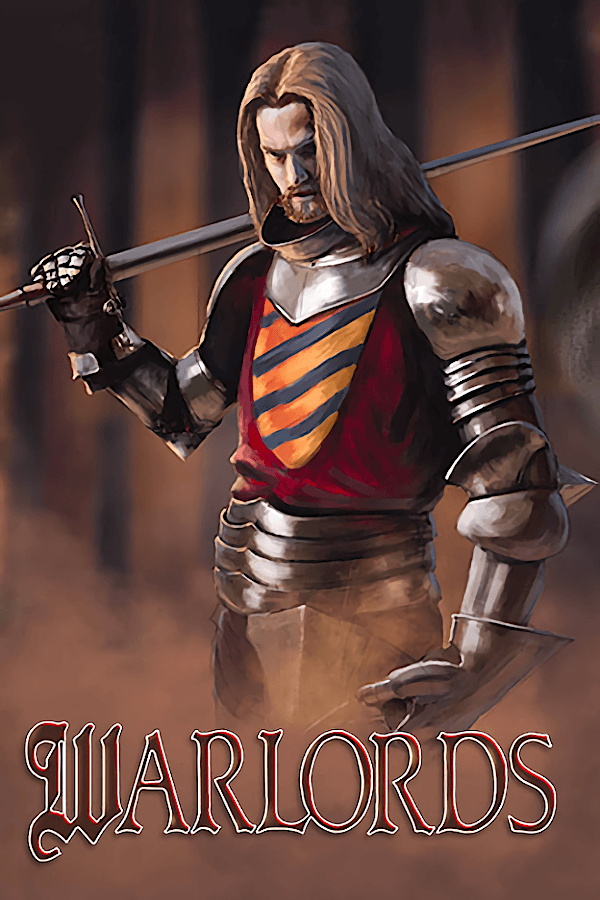

Warlords
Checking…
Long before fantasy strategy split into real-time battles and map painters, Warlords threw eight factions into the land of Illuria and demanded you conquer or raze two-thirds of its eighty cities to win.
Conquering Illuria, one turn at a time
Designer Steve Fawkner adapted the setting directly from his own tabletop Dungeons & Dragons campaign, translating paper maps into a tile grid where managing cash flow is just as vital as hoarding dragons. Released in 1990 by Australian developer SSG Strategic Studies Group, this early entry in fantasy strategy / tactics gives you a single objective: wipe out your seven rivals or seize fifty-four of the map's eighty cities. You choose from eight distinct factions, including the knightly Sirians, the Orcs of Kor, the Elvallie elves, or the dark forces of Lord Bane.
Every turn hinges on spending accrued gold to produce armies inside captured cities while shuffling stacks of units across forests, mountains, and plains. Basic infantry and light cavalry take only a turn or two to build, but high-end units demand massive treasuries and long wait times. Because income derives entirely from held cities, an expanding front line directly funds your next wave of conquest.
Heroes drive the strategic tempo far more than standard foot soldiers. Moving a hero into unmapped ruins, ancient temples, or forgotten libraries triggers random events that can dramatically alter a match. A single lucky expedition might reward you with a magical sword, a blessing from one of the map's rare altars, or direct recruitment of top-tier allies like giant eagles and dragons.
Where Warlords excels and where the dice burn you
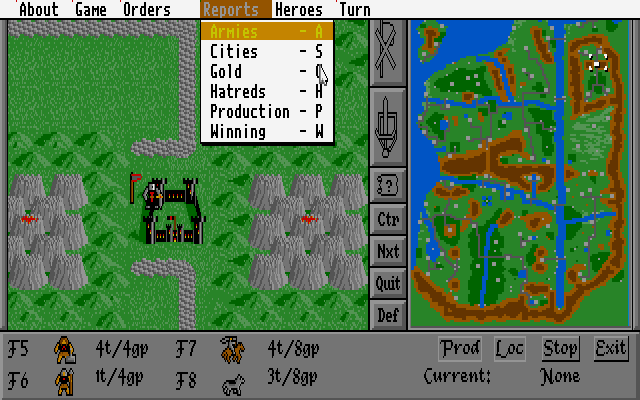
For all its strategic weight, combat in this SSG Strategic Studies Group title is starkly automated and brutally random. Battles resolve instantly off-screen based on raw unit statistics, terrain modifiers, and invisible dice rolls. When sending a lone hero into an unscouted ruin, you either walk out with an game-altering relic or watch your prized leader instantly vanish to a hidden monster. That harsh binary leads almost every modern player to aggressively save and reload before stepping onto a dungeon tile.
The interface relies heavily on mouse interaction, demanding endless single clicks to move units step-by-step across the terrain. While basic keyboard shortcuts exist, managing dozens of active stacks across eighty individual settlements becomes an endurance test in the late game. When playing hotseat multiplayer on a single PC with up to seven human opponents, the downtime between turns can easily stretch past an hour as each player micromanages their income and movement.
- City Management: Balance gold production against army recruitment build times.
- Hero Exploration: Hunt for magic items, gold caches, and monster recruitments in ruined sites.
- Stack Tactics: Combine slow heavy hitters with fast scout units to optimize army movement.
- Objective Tracking: Push forward until you hold fifty-four cities or eliminate all seven enemy capitals.
Computer Gaming World awarded it wargame of the year in 1991, celebrating its aggressive computer opponents, while Dragon Magazine rated it five out of five stars. Reviewers noted at the time that despite sparse audio and modest visuals, the decision loop provided exceptional value per dollar spent.
How SSG built a tabletop campaign into code
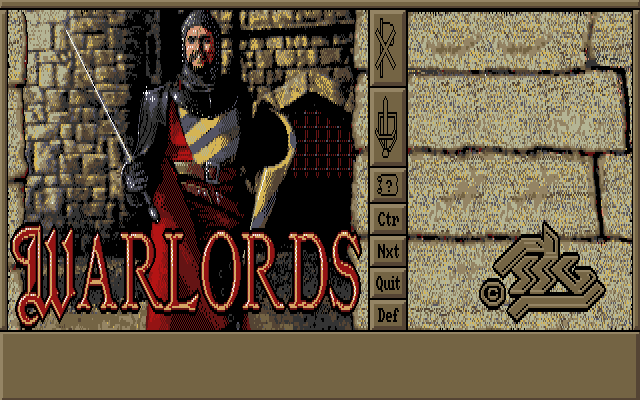
Programmed by Roger Keating and Stephen Hart, with artwork by Graeme Whittle, the turn-based structure drew heavy influence from classic tabletop mechanics and earlier computer titles like 1983's Empire. Many of the city names scattered across Illuria were explicit homages to high fantasy literature, particularly the works of J.R.R. Tolkien. The game went on to sell over 50,000 copies, spawning multiple direct sequels and setting the framework for Fawkner's later work on Puzzle Quest.
Audio is functional rather than theatrical, running basic PC speaker bleeps alongside sparse Sound Blaster support. Yet that visual and sound minimalism kept the game fast and lean on standard 286 and 386 hardware, allowing the AI rivals to calculate their turns without grinding the processor to a complete halt.
Why Warlords still demands your attention today
What endures in this classic MS-DOS game is the ruthless clarity of its map control. There are no diplomatic treaties to stall for time, no complex supply lines to balance, and no tech trees to navigate. You either expand your borders aggressively, locate artifacts to empower your armies, or get swallowed whole by neighboring empires that show zero hesitation when your garrison numbers dip.
If you want to experience the foundation of turn-based fantasy conquerors, you can play Warlords online right now. You can jump straight into the full Warlords free in your browser without setting up old system files or mounting virtual drives. New players often mistake heroes for invincible frontline tanks, but keeping them shielded within a stack of basic infantry until they grab a few magical upgrades is the secret to surviving your first twenty turns in Illuria.
Players' controls
Touch and gamepad controls
The on-screen keyboard and gamepad mapping the browser player uses on a phone, a tablet or a controller, as opposed to the real keys above. $PRO members make their own in the player and share them here; anyone can pick one to play with.
Make your own touch controlsPRO
- 1Open the editorSign in below, then pick what to make. The game starts with the editor open over it.
- 2Place your keysAdd keys and drag them where your thumbs rest, or map a controller's buttons. Test plays the game with them; Save keeps them, and you play with them from then on.
- 3Share themShare them right after saving in the game, or name and share them here. Players vote, and the best become this game's controls for everyone.
Go PROSee how it worksSign in+20 XP for sharing · +50 XP if yours become the game's own
- The game's own controlsNone yet: played with a real keyboard only.In use
2 screenshots
From the archive
No reviews yet
Tell the community what you think of Warlords. Reviews are public and tied to your username.
No archived manuals for Warlords yet
No manuals archived for this title yet. Sign in to upload the first scan.
Cheat codes, console commands and memory pokes for Warlords — each one verified and attributed.
Sign in to submitNo cheats yet for this title
Know a working cheat, poke or trainer? Add it with the button above. Moderators check every entry before it goes live.
No archived soundtrack for Warlords yet
No soundtrack archived for this title yet. Sign in to upload the first rip.
No save states for Warlords yet
No save states for this title yet. Sign in to share one.
Discussions
Sign in to post- Threads0
- Total posts0
- Online now6
Community · Warlords
Who's contributing, and what's new
- Reviews0
- Threads0
- Uploadsapproved0
- Contributors0
Recent activity
Nothing here yet
Reviews, discussion threads and approved uploads appear here as members add them.