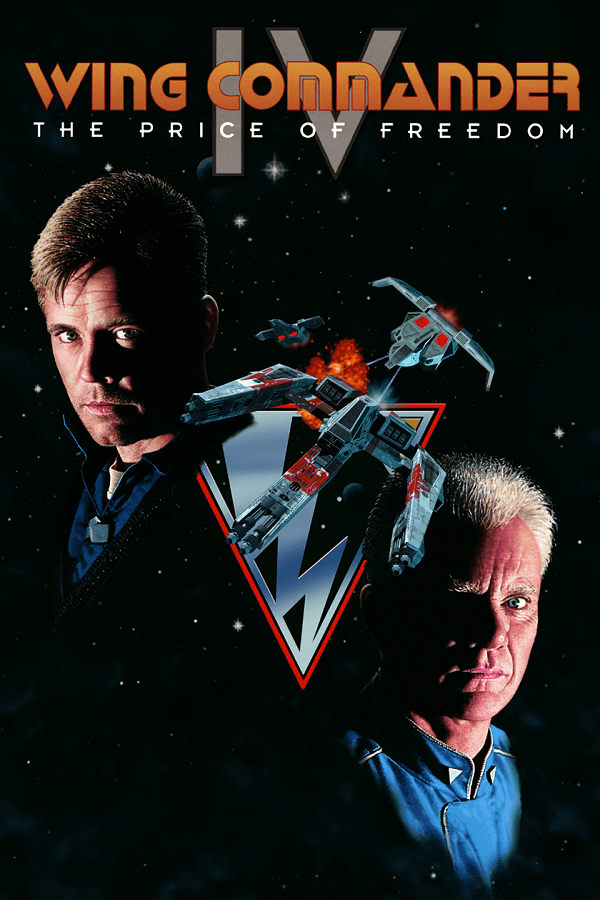
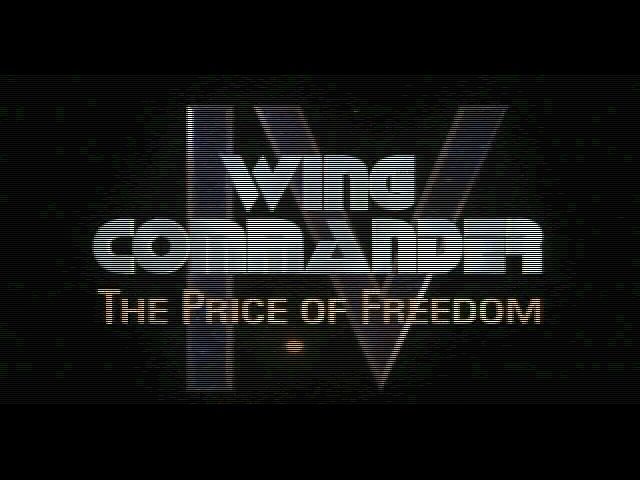
When you load Wing Commander IV: The Price of Freedom, you are immediately dropped into a multi-million-dollar space opera where video cutscenes share equal footing with cockpit dogfights.
Director Chris Roberts pushed the interactive movie concept past its usual limits for this 1996 release. Instead of filming actors against cheap green screen backdrop curtains, ORIGIN Systems, Inc. spent over ten million dollars building physical sci-fi sets and shooting on 35mm film. Mark Hamill returned as Colonel Christopher Blair, alongside Malcolm McDowell as Admiral Tolwyn, John Rhys-Davies, and Tom Wilson. The investment showed on screen, but it also meant the MS-DOS release arrived on six CD-ROM discs, demanding huge swathes of hard drive space and a high-end Pentium to run smoothly.
The cinematic weight meant something for the gameplay too. Between sorties, you walk through space station corridors and carrier decks, choosing conversation options that dictate where the story swings next. A single response to a crewmate can alter morale, open up alternative flight paths, or trigger a complete political defection from the Terran Confederation to the Border Worlds. That choice transforms your subsequent mission strings, changing your home carrier and swapping your roster of wingmen.
The core structure balances high-stakes dialogue choices with classic space sim combat powered by Origin's RealSpace engine. You are not simply following a rigid line of script; your decisions alter the target priorities and military standing of your faction across systems like Nephele, Hellespont, and Silenos.
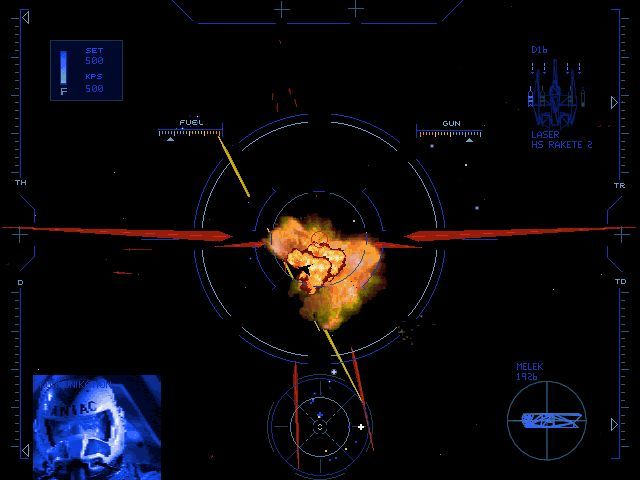
In the air, ship selection directly shapes how you survive an ambush. You fly a varied hanger of craft, including agile interdictors and heavy assault platforms:
Arming these spaceframes means picking the right tool for the hull type. Tachyon cannons offer long-range punch, while plasma and fission cannons burn through heavy shields when you get close enough to see the enemy canopy glaze.
Once you clear the launch tube, space combat is fast and uncompromising. Mid-flight objectives frequently shift without warning, forcing quick decisions, such as breaking off from a primary target to protect a downed wingman or ignoring cries for help to eliminate a fleeing transport. Engine sound effects and radio chatter pop over Sound Blaster and Roland MIDI hardware, keeping audio feedback crisp while you balance energy distribution between shields and weapons.
The flight mechanics excel, but the campaign structure holds one glaring frustration: you can only save your game between mission briefings. If you survive twenty minutes of dogfighting, dodge anti-fighter flak, and then get clipped by a stray missile while approaching the landing bay, you start the whole briefing over. That strict save rule makes late-game sorties across systems like Callimachus and Axius an exercise in raw nerves.
The difficulty curve reaches a brutal peak near the end of the campaign. The final dogfight against the rival ace Seether drops the margin for error to zero, requiring absolute precision with your flight controls and shields. Players who found themselves hopelessly outmatched often turned to the command line, launching the game with the wc4 -chicken parameter. Once active, hitting Ctrl + W vaporized your targeted foe, while Ctrl + Alt + W swept every enemy ship off the radar instantly.
Publisher Electronic Arts, Inc. treated the release as a flagship product, placing it among the most ambitious investments in mid-nineties gaming. To save costs on minor roles, the developers inserted themselves directly into the universe. The non-speaking "redshirt" pilots listed in your flight roster use names, photographs, and voice snippets from actual Origin staff members, including team members Frank "Turbo" Roan and Anthony "Yaeger" Sommers.
The game pushes the boundaries of simulation games from 1996 by forcing players to question their orders rather than blindly shooting down marked targets. When you uncover the conspiracy behind the Black Lance and their rogue factions, the story stops being about simple military victory and turns into a debate over military ethics and survival.
This entry in the franchise holds up because its branching structure actually matters, giving genuine weight to your decisions in the briefing room and in the cockpit. While the late-game difficulty spikes and rigid save system can test your patience, the dogfighting mechanics and high-budget storytelling retain their punch. If you want to sample its best moment, jump straight into a Border Worlds defection run to experience how mid-mission choices completely reshape the war effort.
You can play Wing Commander IV: The Price of Freedom online, free in your browser right now, with nothing to install and no complex setup required. Boot it up, step into Maverick's cockpit, and see if you can outmaneuver Seether in deep space.
When you load Wing Commander IV: The Price of Freedom, you are immediately dropped into a multi-million-dollar space opera where video cutscenes share equal footing with cockpit dogfights.
Director Chris Roberts pushed the interactive movie concept past its usual limits for this 1996 release. Instead of filming actors against cheap green screen backdrop curtains, ORIGIN Systems, Inc. spent over ten million dollars building physical sci-fi sets and shooting on 35mm film. Mark Hamill returned as Colonel Christopher Blair, alongside Malcolm McDowell as Admiral Tolwyn, John Rhys-Davies, and Tom Wilson. The investment showed on screen, but it also meant the MS-DOS release arrived on six CD-ROM discs, demanding huge swathes of hard drive space and a high-end Pentium to run smoothly.
The cinematic weight meant something for the gameplay too. Between sorties, you walk through space station corridors and carrier decks, choosing conversation options that dictate where the story swings next. A single response to a crewmate can alter morale, open up alternative flight paths, or trigger a complete political defection from the Terran Confederation to the Border Worlds. That choice transforms your subsequent mission strings, changing your home carrier and swapping your roster of wingmen.
The core structure balances high-stakes dialogue choices with classic space sim combat powered by Origin's RealSpace engine. You are not simply following a rigid line of script; your decisions alter the target priorities and military standing of your faction across systems like Nephele, Hellespont, and Silenos.
In the air, ship selection directly shapes how you survive an ambush. You fly a varied hanger of craft, including agile interdictors and heavy assault platforms:
Arming these spaceframes means picking the right tool for the hull type. Tachyon cannons offer long-range punch, while plasma and fission cannons burn through heavy shields when you get close enough to see the enemy canopy glaze.
Once you clear the launch tube, space combat is fast and uncompromising. Mid-flight objectives frequently shift without warning, forcing quick decisions, such as breaking off from a primary target to protect a downed wingman or ignoring cries for help to eliminate a fleeing transport. Engine sound effects and radio chatter pop over Sound Blaster and Roland MIDI hardware, keeping audio feedback crisp while you balance energy distribution between shields and weapons.
The flight mechanics excel, but the campaign structure holds one glaring frustration: you can only save your game between mission briefings. If you survive twenty minutes of dogfighting, dodge anti-fighter flak, and then get clipped by a stray missile while approaching the landing bay, you start the whole briefing over. That strict save rule makes late-game sorties across systems like Callimachus and Axius an exercise in raw nerves.
The difficulty curve reaches a brutal peak near the end of the campaign. The final dogfight against the rival ace Seether drops the margin for error to zero, requiring absolute precision with your flight controls and shields. Players who found themselves hopelessly outmatched often turned to the command line, launching the game with the wc4 -chicken parameter. Once active, hitting Ctrl + W vaporized your targeted foe, while Ctrl + Alt + W swept every enemy ship off the radar instantly.
Publisher Electronic Arts, Inc. treated the release as a flagship product, placing it among the most ambitious investments in mid-nineties gaming. To save costs on minor roles, the developers inserted themselves directly into the universe. The non-speaking "redshirt" pilots listed in your flight roster use names, photographs, and voice snippets from actual Origin staff members, including team members Frank "Turbo" Roan and Anthony "Yaeger" Sommers.
The game pushes the boundaries of simulation games from 1996 by forcing players to question their orders rather than blindly shooting down marked targets. When you uncover the conspiracy behind the Black Lance and their rogue factions, the story stops being about simple military victory and turns into a debate over military ethics and survival.
This entry in the franchise holds up because its branching structure actually matters, giving genuine weight to your decisions in the briefing room and in the cockpit. While the late-game difficulty spikes and rigid save system can test your patience, the dogfighting mechanics and high-budget storytelling retain their punch. If you want to sample its best moment, jump straight into a Border Worlds defection run to experience how mid-mission choices completely reshape the war effort.
You can play Wing Commander IV: The Price of Freedom online, free in your browser right now, with nothing to install and no complex setup required. Boot it up, step into Maverick's cockpit, and see if you can outmaneuver Seether in deep space.
aka Wing Commander IV: Mekhir ha-Khofesh · Wing Commander IV: O Preço da Liberdade · 银河飞将4:自由的代价
How Wing Commander IV: The Price of Freedom is played — the keys the game listens to, grouped by what they do.
Highlighted keys are mapped — hover or tap one to see what it does.
Joystick calibration can be performed in-flight via Alt+C or during setup. Control device selection can be changed via Alt+O in-flight.
The on-screen keyboard and gamepad mapping the browser player uses on a phone, a tablet or a controller, as opposed to the real keys above. $PRO members make their own in the player and share them here; anyone can pick one to play with.
Cheat codes, console commands and memory pokes for Wing Commander IV: The Price of Freedom — each one verified and attributed.
Sign in to submitHow Wing Commander IV: The Price of Freedom is played — the keys the game listens to, grouped by what they do.
Highlighted keys are mapped — hover or tap one to see what it does.
Joystick calibration can be performed in-flight via Alt+C or during setup. Control device selection can be changed via Alt+O in-flight.
The on-screen keyboard and gamepad mapping the browser player uses on a phone, a tablet or a controller, as opposed to the real keys above. $PRO members make their own in the player and share them here; anyone can pick one to play with.
Cheat codes, console commands and memory pokes for Wing Commander IV: The Price of Freedom — each one verified and attributed.
Sign in to submit
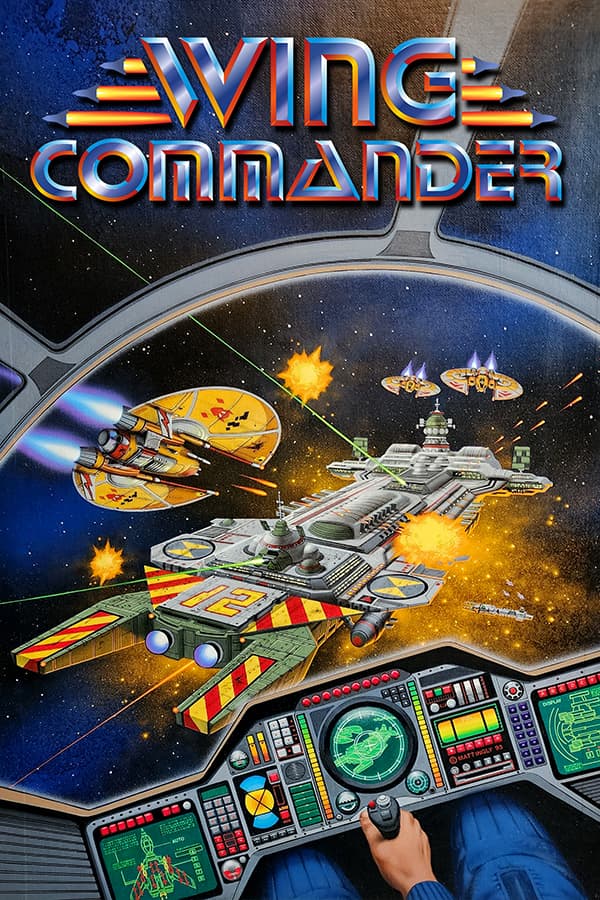
Wing Commander1990
Wing Commander1990