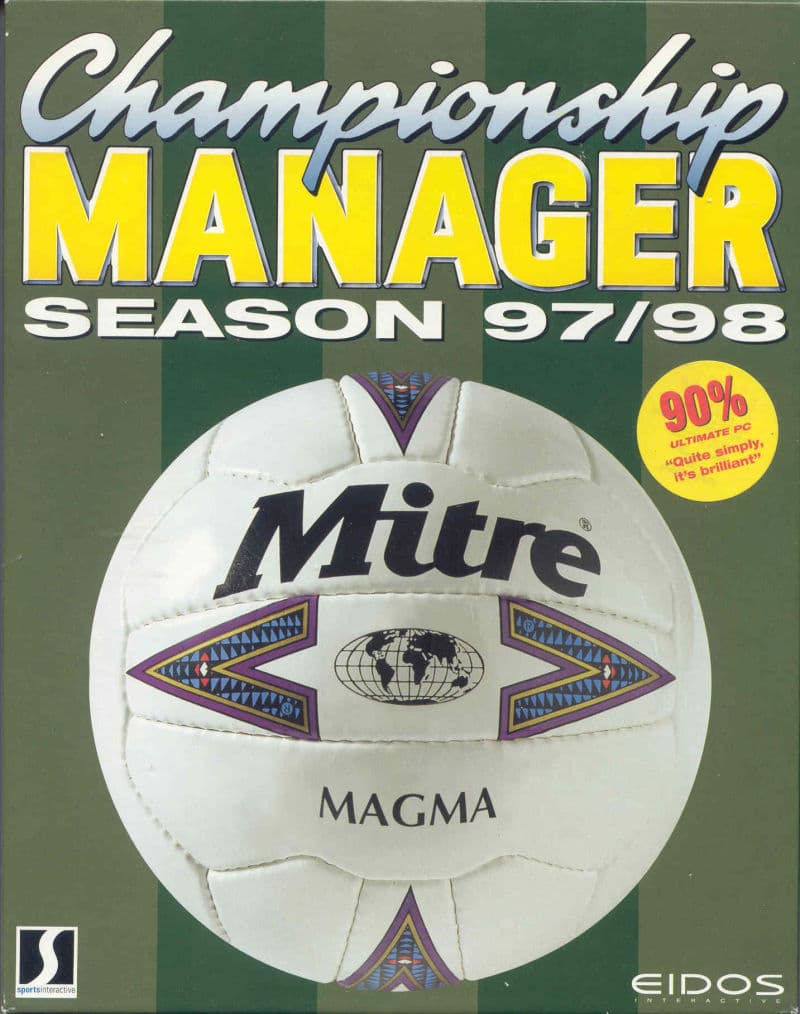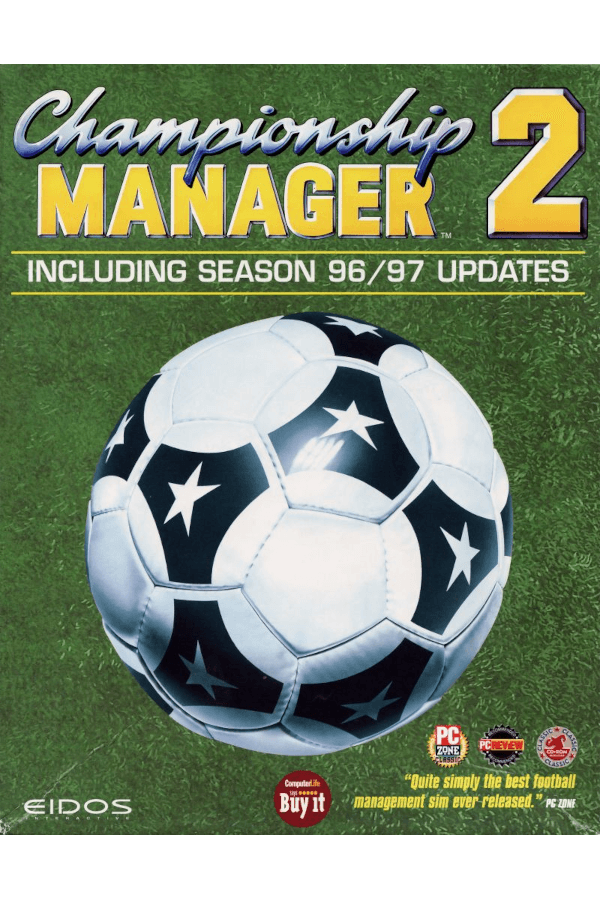

Launching Championship Manager 96/97 meant staring at walls of text and static club lists while pretending you were building the greatest football squad in Europe. It was raw, fast on a PC, and completely uncompromising when your star striker refused to sign a contract extension.
Built on the existing Championship Manager 2 engine by brothers Paul and Oliver Collyer, this seasonal update brought team rosters up to speed for the 1996/1997 campaign. Rather than just swapping player names across the English, Scottish, and Italian leagues, the developers introduced the real-life Bosman ruling directly into player contract negotiations. For the first time, European Union players could walk away from their clubs at the end of their contracts without a transfer fee, turning squad assembly into a balance of wage structures and deadline timing.
You spend your time clicking through text-heavy menus, monitoring team tactics, buying and selling players, and advancing the season week by week. Watching player contract expiration dates became just as vital as scouting match form. If you neglected salary negotiations, a rival club would quietly step in, offer a higher sign-on fee, and scoop up your top talent for free the moment summer arrived.
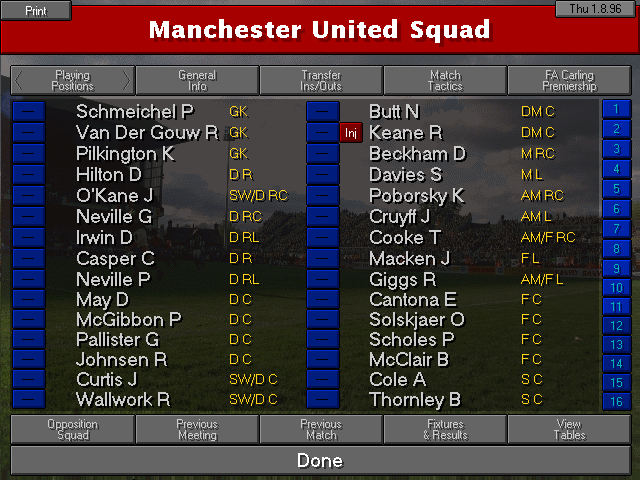
While disk-bound microcomputers of the mid-nineties struggled under the weight of massive player databases, the PC release was famous for its raw engine speed. Running the Championship Manager 96/97 MS-DOS game on an Intel i486 SX processor was enough to process fixture weeks in seconds. The Amiga version of the era became notorious among fans for being agonizingly slow and prone to crashes, but PC managers enjoyed quick, reliable season turnover.
The presentation remains resolutely dry. There are no polygon players or graphical match highlights here; instead, matches resolve via rapid lines of text scrolling across a plain blue background, punctuated by basic sound effects when a goal hits the net. That functional layout is precisely why the season flows so quickly, keeping you hooked on the next fixture without forcing you to sit through long, repetitive animations.
Despite its straightforward interface, the game is famously unforgiving. Modern players looking back at the title often find themselves baffled by how easily a top-tier squad can fall apart. You can field an expensive lineup packed with international stars and still drop three points to a relegation candidate because your tactical sliders were slightly out of alignment with your opponents' setup.
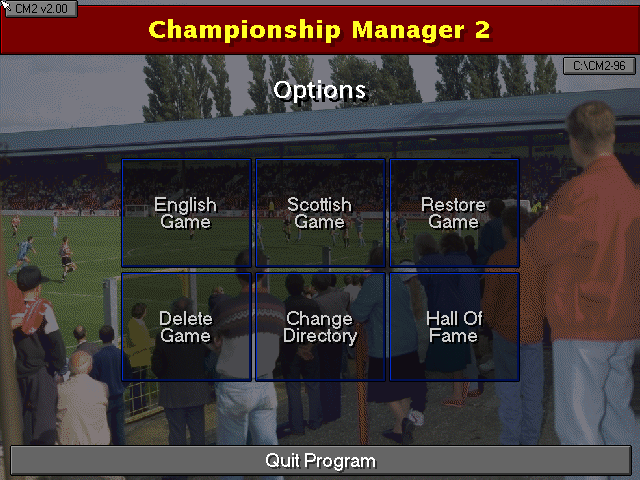
The menu design also holds a few classic traps for uninitiated managers. A notorious point of confusion was the menu option labeled "Restore game", which many newcomers selected expecting to reload a recent save, only to wipe out their progress by reverting to default settings. On the flip side, the game included a famous shortcut for impatient players: typing the name of a real international manager like Glenn Hoddle at the start allowed you to bypass domestic club management entirely and take charge of a national squad right away.
If you enjoy pure managerial strategy, the core loop of balancing club finances, searching transfer lists, and adjusting formations still works. This sports game released by Eidos Interactive in 1996 comes stripped of modern fluff like media interviews, moral sub-menus, or commercial sponsorships.
What plainly fails to hold up is the total lack of feedback when things go wrong. Because the simulation relies entirely on text commentary, figuring out why your team failed to score for five consecutive matches feels like deciphering a secret code. You either learn the subtle logic behind squad fitness and positioning through brutal trial and error, or you watch your manager rating drop until the board sack you without ceremony.
You can play Championship Manager 96/97 online right now without setting up old hardware or hunting down floppy disks. Having Championship Manager 96/97 free in your browser lets you test your tactical instincts against nineties rosters instantly, giving you immediate access to every contract negotiation and fixture list. If you want to see how managerial simulations captured football fans before 3D match graphics took over, set up your formation and start your first season today.
Launching Championship Manager 96/97 meant staring at walls of text and static club lists while pretending you were building the greatest football squad in Europe. It was raw, fast on a PC, and completely uncompromising when your star striker refused to sign a contract extension.
Built on the existing Championship Manager 2 engine by brothers Paul and Oliver Collyer, this seasonal update brought team rosters up to speed for the 1996/1997 campaign. Rather than just swapping player names across the English, Scottish, and Italian leagues, the developers introduced the real-life Bosman ruling directly into player contract negotiations. For the first time, European Union players could walk away from their clubs at the end of their contracts without a transfer fee, turning squad assembly into a balance of wage structures and deadline timing.
You spend your time clicking through text-heavy menus, monitoring team tactics, buying and selling players, and advancing the season week by week. Watching player contract expiration dates became just as vital as scouting match form. If you neglected salary negotiations, a rival club would quietly step in, offer a higher sign-on fee, and scoop up your top talent for free the moment summer arrived.
While disk-bound microcomputers of the mid-nineties struggled under the weight of massive player databases, the PC release was famous for its raw engine speed. Running the Championship Manager 96/97 MS-DOS game on an Intel i486 SX processor was enough to process fixture weeks in seconds. The Amiga version of the era became notorious among fans for being agonizingly slow and prone to crashes, but PC managers enjoyed quick, reliable season turnover.
The presentation remains resolutely dry. There are no polygon players or graphical match highlights here; instead, matches resolve via rapid lines of text scrolling across a plain blue background, punctuated by basic sound effects when a goal hits the net. That functional layout is precisely why the season flows so quickly, keeping you hooked on the next fixture without forcing you to sit through long, repetitive animations.
Despite its straightforward interface, the game is famously unforgiving. Modern players looking back at the title often find themselves baffled by how easily a top-tier squad can fall apart. You can field an expensive lineup packed with international stars and still drop three points to a relegation candidate because your tactical sliders were slightly out of alignment with your opponents' setup.
The menu design also holds a few classic traps for uninitiated managers. A notorious point of confusion was the menu option labeled "Restore game", which many newcomers selected expecting to reload a recent save, only to wipe out their progress by reverting to default settings. On the flip side, the game included a famous shortcut for impatient players: typing the name of a real international manager like Glenn Hoddle at the start allowed you to bypass domestic club management entirely and take charge of a national squad right away.
If you enjoy pure managerial strategy, the core loop of balancing club finances, searching transfer lists, and adjusting formations still works. This sports game released by Eidos Interactive in 1996 comes stripped of modern fluff like media interviews, moral sub-menus, or commercial sponsorships.
What plainly fails to hold up is the total lack of feedback when things go wrong. Because the simulation relies entirely on text commentary, figuring out why your team failed to score for five consecutive matches feels like deciphering a secret code. You either learn the subtle logic behind squad fitness and positioning through brutal trial and error, or you watch your manager rating drop until the board sack you without ceremony.
You can play Championship Manager 96/97 online right now without setting up old hardware or hunting down floppy disks. Having Championship Manager 96/97 free in your browser lets you test your tactical instincts against nineties rosters instantly, giving you immediate access to every contract negotiation and fixture list. If you want to see how managerial simulations captured football fans before 3D match graphics took over, set up your formation and start your first season today.
How Championship Manager 96/97 is played — the keys the game listens to, grouped by what they do.
Highlighted keys are mapped — hover or tap one to see what it does.
The game relies primarily on mouse navigation, supplemented by standard text entry and form navigation keys.
The on-screen keyboard and gamepad mapping the browser player uses on a phone, a tablet or a controller, as opposed to the real keys above. $PRO members make their own in the player and share them here; anyone can pick one to play with.
Cheat codes, console commands and memory pokes for Championship Manager 96/97 — each one verified and attributed.
Sign in to submitHow Championship Manager 96/97 is played — the keys the game listens to, grouped by what they do.
Highlighted keys are mapped — hover or tap one to see what it does.
The game relies primarily on mouse navigation, supplemented by standard text entry and form navigation keys.
The on-screen keyboard and gamepad mapping the browser player uses on a phone, a tablet or a controller, as opposed to the real keys above. $PRO members make their own in the player and share them here; anyone can pick one to play with.
Cheat codes, console commands and memory pokes for Championship Manager 96/97 — each one verified and attributed.
Sign in to submit
Championship Manager 96/971996 · this page