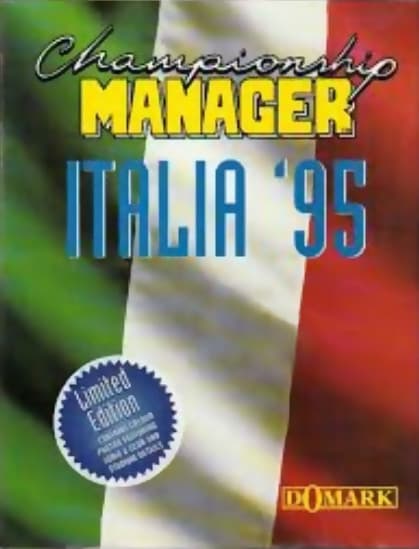
Championship Manager: End of 1994 Season Data Up-date Disk
Before massive databases and graphical match engines took over football simulation, Championship Manager: End of 1994 Season Data Up-date Disk proved that top-fixed text menus, rapid match commentary, and raw squad statistics were all you needed to spend entire sleepless nights chasing promotion.
Setting up your squad on the Championship Manager: End of 1994 Season Data Up-date Disk
You boot the game, face the standard grey-blue interface, and immediately meet the off-pitch ritual every manager knew by heart: typing in historical match scores to pass the manual copy protection. If you did not know the result of that specific cup fixture from the booklet, your season ended before you even picked a team. Once past the check, you are dumped straight into the managerial hot seat, facing top-fixed menus, contract negotiations, and player transfers stripped down to their absolute essentials.
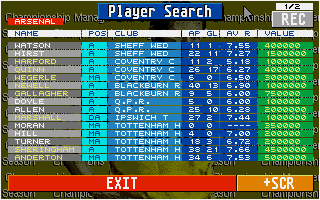
The core loop on MS-DOS relies entirely on text commentary and spreadsheet navigation rather than fancy 3D graphics. You spend your weekdays scanning market lists for bargains, tweaking squad tactics, and balancing your bank balance before hitting the key that runs the weekend match. Matchday presents a dark screen filled with scrolling text commentary that ticks through ninety minutes, where a single line reporting a missed tackle or a long-range shot sends your heart into your mouth.
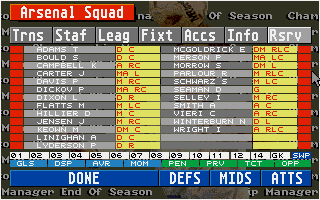
This release reflects the exact close of the 1993/94 campaign across the top divisions in English football, incorporating structural tweaks alongside fresh roster updates. The main improvements rolled into this version include:
- Accurate squad lists for all four main English divisions at the conclusion of the 1993/94 season.
- Inclusion of foreign players who migrated to English clubs throughout that specific playing year.
- Updated English cup competition formats matching contemporary rule changes.
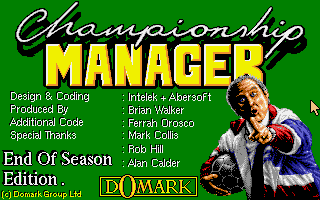
- A newly added static background image alongside revised engine calculations.
Compared to earlier management games from 1994, the minimalist design keeps you focused on building a coherent roster rather than wrestling with bloated menus.
Faster engine processing comes with a much tougher pitch
The original base game was infamous for slowing down to a crawl when calculating results for other divisions between fixtures. Designers Paul and Oliver Collyer tightened up the background calculations for this release, cutting the dreaded end-of-season processing downtime to a brisk fifteen minutes. That speed increase made running multi-season careers across the lower divisions far less painful on standard hardware.
Speed was not the only tweak the Collyer brothers made under the hood. The general difficulty was ratcheted up a notch compared to the standard 1993 release. Computer-controlled managers make smarter mid-game tactical adjustments, and squad morale drops off sharply if key players spend too many weeks sitting on the bench. You can no longer rely on taking a lower league side to the FA Cup final in your very first season without careful rotation and strict financial discipline.
Published by Domark Software Ltd and developed alongside Domark Software, Inc., the expansion expanded on the ground set by the original engine without breaking what worked. Success demands reading between the lines of form charts and matching player traits to your tactical shape, punishing managers who throw money at famous names without checking squad harmony.
Database quirks, foreign imports, and hidden staff jokes
The headline attraction of the update disk was catching up with the sudden wave of overseas talent arriving in England during the early Premier League era. Bringing in high-profile imports altered squad dynamics, requiring managers to balance massive wage bills against on-pitch results. Every squad sheet felt instantly recognizable to anyone who spent Saturdays glued to television summaries that year.
The disk also carries its share of fan trivia and developer mischief. While PC owners enjoyed the refined database, Amiga owners famously found two fictional super-players sneaked into the Cambridge United squad by the development team: striker Mark Collis and defender Ferrah Orosco. These imaginary talents came with extraordinary stats that could carry a modest team to dominant league runs single-handedly.
Floppy disk installations of the day had their own hazards. Players running cracked software or misconfiguring target directories frequently found the game silently defaulting back to the original 1993 roster database, wiping out all new transfers without throwing an explicit error message. If your new foreign star was nowhere to be seen on day one, your installation directory was usually the culprit.
Where this expansion stumbles and how to play Championship Manager: End of 1994 Season Data Up-date Disk today
For all its appeal, the expansion retains some annoying design choices. The interface lacks basic search filters, forcing you to scroll through extensive squad rosters by hand to locate specific targets. Injuries can strike in bunches without adequate medical feedback, leaving you short on starters right before crucial cup ties with very little tactical recourse.
If you enjoy text-driven sports strategy, this update delivers pure football management. It strips away the media management and financial micro-transactions of modern entries, putting full focus on squad assembly and tactical decisions. Fans of text simulations will find plenty of grit and challenge in guiding a second-tier club toward top-flight glory.
You can play Championship Manager: End of 1994 Season Data Up-date Disk online right here in your browser, completely free and ready to run. Because modern browser emulation does not support standard hard disk saves, plan your managerial career around dedicated single-session campaigns. Fire up the tactics board, double-check your starting lineup, and test your touchline instincts without installing any extra software.