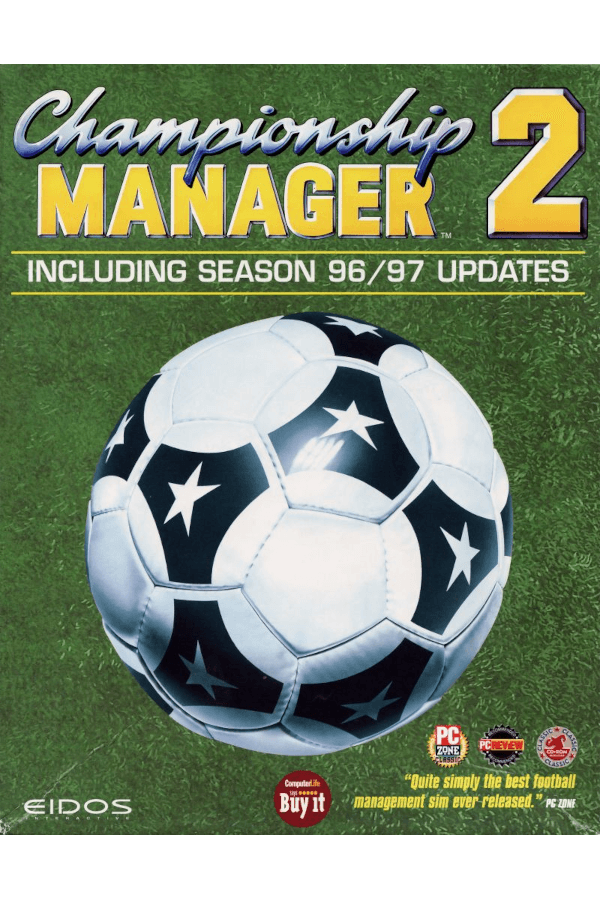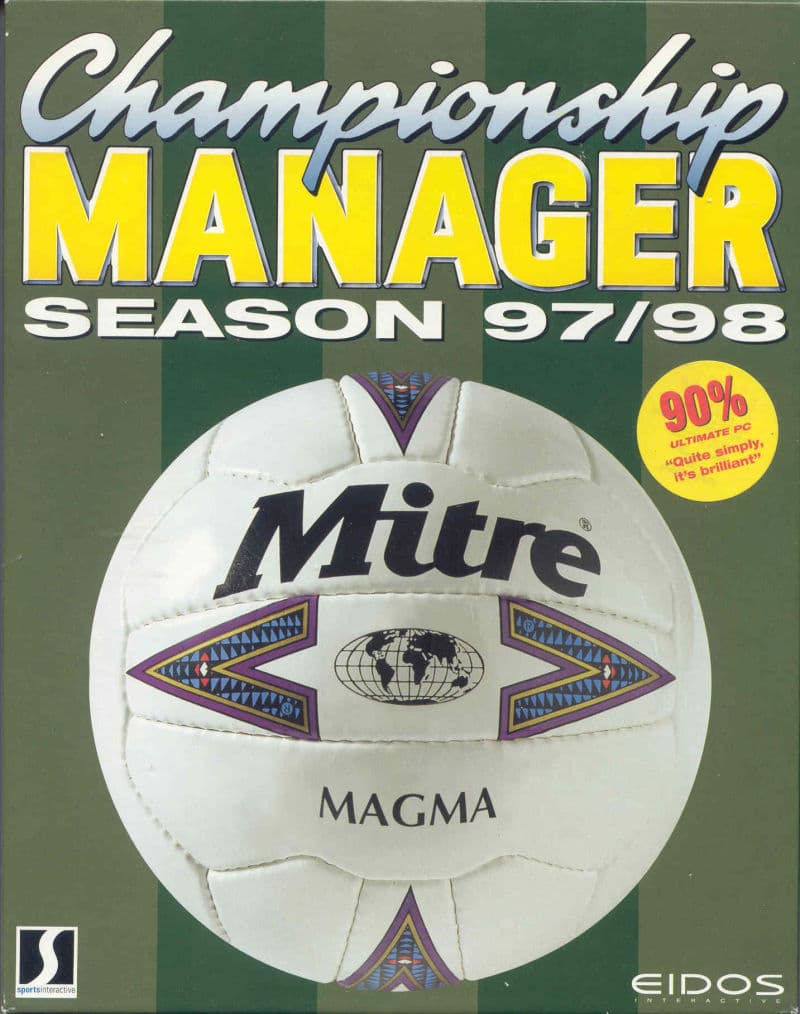
If you spent late nights staring at numbers on a CRT monitor, Championship Manager: Season 97/98 was the exact moment text-based management became an absolute obsession.
Created by brothers Paul and Oliver Collyer, this release was the final update built on the engine of Championship Manager 2 and the last entry in the series developed for MS-DOS. The big technical leap for this edition was offering nine playable European leagues. If your PC packed 16 megabytes of RAM or more, you could run up to three of those leagues simultaneously, keeping distant transfer markets active while you ran your own domestic campaign.
That extra database depth fundamentally changed how squad building felt. Team rosters were updated for the current campaign, allowing players to manage fresh talent like Michael Owen at Liverpool or recent arrival Emmanuel Petit at Arsenal. For fans who wanted to alter reality, the developers included an official full data editor for the first time, opening up player attributes and squad budgets to custom tweaking before launching a new campaign.
When it hit store shelves in 1997, the game became the top-selling PC title in the UK. The publisher shipped the physical disc without any CD copy-protection, which meant friends routinely passed the disc around to install it across multiple home machines. That lack of friction helped it spread like wildfire through school classrooms and office desks alike.
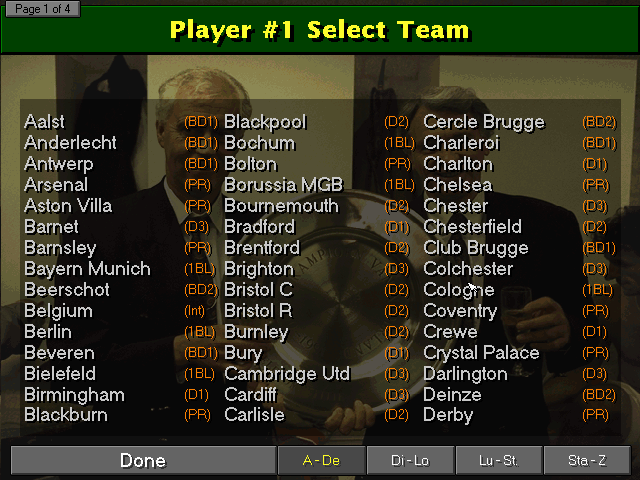
Out on the pitch, you will not find 3D action heroes, polygonal stadiums, or animated match highlights. The entire match engine resolves through fast scrolling text commentary paired with static possession percentage bars. Yet managing line-ups, renewing contracts, setting up custom formations, and reading scout reports required careful attention to hidden stats and player morale.
Because the scouting pool was so massive, finding cheap talent became an essential part of the experience. Every veteran manager from the era quickly memorized a specific list of bargain wonderkids who guaranteed goals. Ibrahima Bakayoko, Tommy Svindal Larsen, and Erik Nevland became household names among fans simply because their ingame stats punched far above their modest real-world price tags.
Success meant carefully balancing your wage bill against stadium upgrades while constantly tinkering with your squad depth. Setting up tactics required deciding who took set pieces, how high your defensive line pushed, and whether your squad used direct passing or counter-attacking styles. When your custom strategy gelled, watching the text commentary describe a last-minute goal offered a rush that few graphical sports games could match.
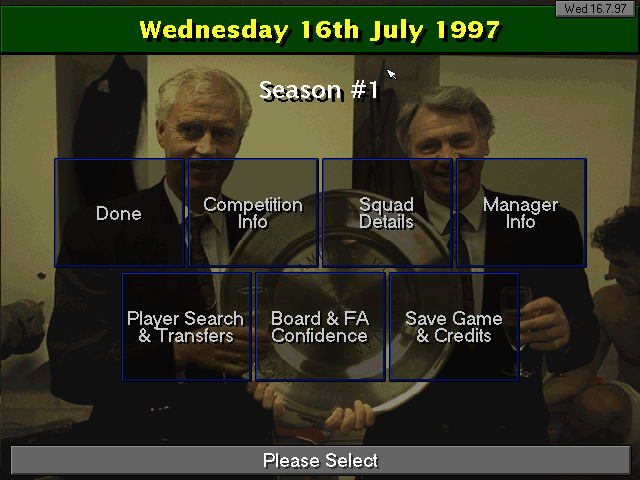
For all its speed, the game could be downright cruel to a manager on a winning streak. The AI had a notorious habit of triggering sudden mid-season form drops, causing your squad to lose a string of matches at the exact same point every year regardless of your tactical adjustments. Squad morale would plunge overnight, leaving players scrambling to fix problems that felt entirely baked into the code.
If you were playing in the English Premiership, dethroning Manchester United in your first season was nearly impossible. The computer-controlled side collected points at an absurd rate, rarely dropping matches against mid-table opposition. Adding to your frustration, key players were frequently called away on international duty right before crucial cup semi-finals or title deciders, leaving your starting eleven gutted for the biggest fixtures of the year.
Running the MS-DOS game on modern setups can also bring technical quirks, as unconfigured emulators often cause match processing speeds to crawl or lock up completely. In the nineties, players discovered a famous work-around to bypass slow processing. Launching Sensible World of Soccer 96/97 in career mode right before booting up CM 97/98 somehow forced the match engine calculations to process significantly faster.
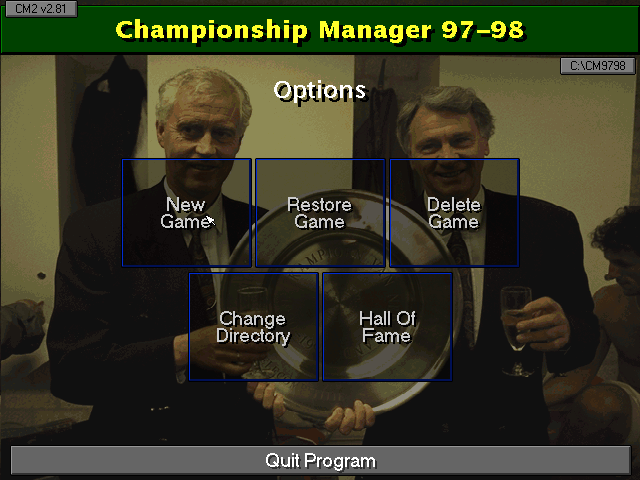
This release represented the absolute peak of the series' classic two-dimensional layout before transitioning to the overhauled engine of Championship Manager 3. When developer Sports Interactive parted ways with publisher Eidos, Inc. in 2003, Eidos retained the brand name, but the original development team kept the underlying source code and database structure. That underlying framework was used to launch the modern Football Manager franchise, as documented on Wikipedia.
What makes this specific edition hold up so well compared to modern management simulations is its sheer momentum. You do not have to sit through press conferences, manage social media feeds, or deal with hundreds of backroom staff interactions. You pick your squad, set your tactics, hit spacebar to process the week, and move straight into the next fixture.
That stripped-back design lets you burn through an entire season in a couple of evenings. While modern management games offer detail down to individual youth training routines, there is something clean about an interface that functions like a lightning-fast spreadsheet with passion attached to it.
If you are looking for complex 3D match engines, look elsewhere. The basic aesthetics and severe difficulty spikes can punish careless managers, but the raw speed of match simulation and the joy of finding bargain wonderkids hold the whole thing together. If you want a deep management sim that respects your time and lets you fly through fixtures, few versions get the pace so right.
You can play Championship Manager: Season 97/98 online right now for free in your browser. There is nothing to install and no setup required, so you can pick your club, sign Bakayoko, and see if you can dethrone Manchester United tonight.
If you spent late nights staring at numbers on a CRT monitor, Championship Manager: Season 97/98 was the exact moment text-based management became an absolute obsession.
Created by brothers Paul and Oliver Collyer, this release was the final update built on the engine of Championship Manager 2 and the last entry in the series developed for MS-DOS. The big technical leap for this edition was offering nine playable European leagues. If your PC packed 16 megabytes of RAM or more, you could run up to three of those leagues simultaneously, keeping distant transfer markets active while you ran your own domestic campaign.
That extra database depth fundamentally changed how squad building felt. Team rosters were updated for the current campaign, allowing players to manage fresh talent like Michael Owen at Liverpool or recent arrival Emmanuel Petit at Arsenal. For fans who wanted to alter reality, the developers included an official full data editor for the first time, opening up player attributes and squad budgets to custom tweaking before launching a new campaign.
When it hit store shelves in 1997, the game became the top-selling PC title in the UK. The publisher shipped the physical disc without any CD copy-protection, which meant friends routinely passed the disc around to install it across multiple home machines. That lack of friction helped it spread like wildfire through school classrooms and office desks alike.

Out on the pitch, you will not find 3D action heroes, polygonal stadiums, or animated match highlights. The entire match engine resolves through fast scrolling text commentary paired with static possession percentage bars. Yet managing line-ups, renewing contracts, setting up custom formations, and reading scout reports required careful attention to hidden stats and player morale.
Because the scouting pool was so massive, finding cheap talent became an essential part of the experience. Every veteran manager from the era quickly memorized a specific list of bargain wonderkids who guaranteed goals. Ibrahima Bakayoko, Tommy Svindal Larsen, and Erik Nevland became household names among fans simply because their ingame stats punched far above their modest real-world price tags.
Success meant carefully balancing your wage bill against stadium upgrades while constantly tinkering with your squad depth. Setting up tactics required deciding who took set pieces, how high your defensive line pushed, and whether your squad used direct passing or counter-attacking styles. When your custom strategy gelled, watching the text commentary describe a last-minute goal offered a rush that few graphical sports games could match.

For all its speed, the game could be downright cruel to a manager on a winning streak. The AI had a notorious habit of triggering sudden mid-season form drops, causing your squad to lose a string of matches at the exact same point every year regardless of your tactical adjustments. Squad morale would plunge overnight, leaving players scrambling to fix problems that felt entirely baked into the code.
If you were playing in the English Premiership, dethroning Manchester United in your first season was nearly impossible. The computer-controlled side collected points at an absurd rate, rarely dropping matches against mid-table opposition. Adding to your frustration, key players were frequently called away on international duty right before crucial cup semi-finals or title deciders, leaving your starting eleven gutted for the biggest fixtures of the year.
Running the MS-DOS game on modern setups can also bring technical quirks, as unconfigured emulators often cause match processing speeds to crawl or lock up completely. In the nineties, players discovered a famous work-around to bypass slow processing. Launching Sensible World of Soccer 96/97 in career mode right before booting up CM 97/98 somehow forced the match engine calculations to process significantly faster.

This release represented the absolute peak of the series' classic two-dimensional layout before transitioning to the overhauled engine of Championship Manager 3. When developer Sports Interactive parted ways with publisher Eidos, Inc. in 2003, Eidos retained the brand name, but the original development team kept the underlying source code and database structure. That underlying framework was used to launch the modern Football Manager franchise, as documented on Wikipedia.
What makes this specific edition hold up so well compared to modern management simulations is its sheer momentum. You do not have to sit through press conferences, manage social media feeds, or deal with hundreds of backroom staff interactions. You pick your squad, set your tactics, hit spacebar to process the week, and move straight into the next fixture.
That stripped-back design lets you burn through an entire season in a couple of evenings. While modern management games offer detail down to individual youth training routines, there is something clean about an interface that functions like a lightning-fast spreadsheet with passion attached to it.
If you are looking for complex 3D match engines, look elsewhere. The basic aesthetics and severe difficulty spikes can punish careless managers, but the raw speed of match simulation and the joy of finding bargain wonderkids hold the whole thing together. If you want a deep management sim that respects your time and lets you fly through fixtures, few versions get the pace so right.
You can play Championship Manager: Season 97/98 online right now for free in your browser. There is nothing to install and no setup required, so you can pick your club, sign Bakayoko, and see if you can dethrone Manchester United tonight.
How Championship Manager: Season 97/98 is played — the keys the game listens to, grouped by what they do.
Highlighted keys are mapped — hover or tap one to see what it does.
Keyboard remapping and setup options are not available.
The on-screen keyboard and gamepad mapping the browser player uses on a phone, a tablet or a controller, as opposed to the real keys above. $PRO members make their own in the player and share them here; anyone can pick one to play with.
Cheat codes, console commands and memory pokes for Championship Manager: Season 97/98 — each one verified and attributed.
Sign in to submitHow Championship Manager: Season 97/98 is played — the keys the game listens to, grouped by what they do.
Highlighted keys are mapped — hover or tap one to see what it does.
Keyboard remapping and setup options are not available.
The on-screen keyboard and gamepad mapping the browser player uses on a phone, a tablet or a controller, as opposed to the real keys above. $PRO members make their own in the player and share them here; anyone can pick one to play with.
Cheat codes, console commands and memory pokes for Championship Manager: Season 97/98 — each one verified and attributed.
Sign in to submit
Championship Manager: Season 97/981997 · this page