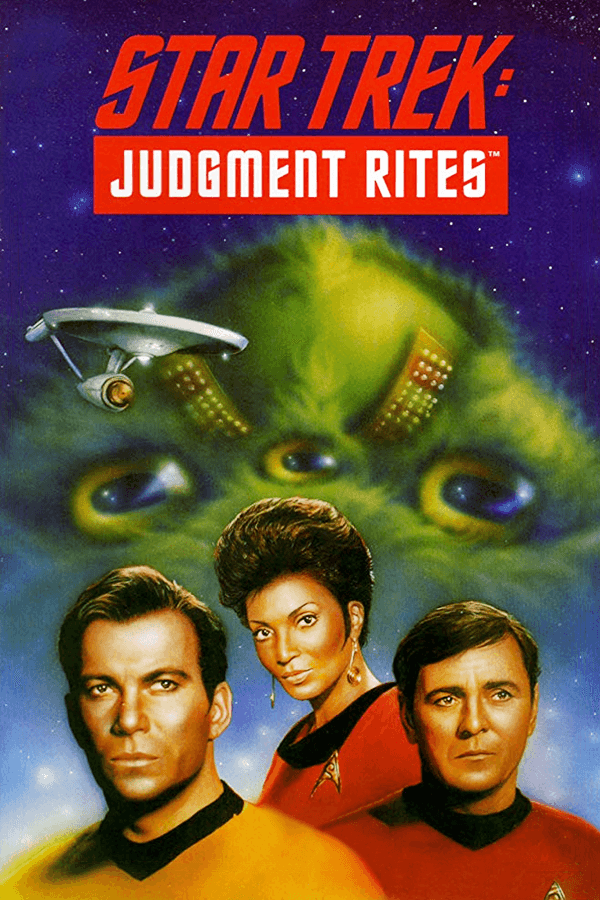
Star Trek: Judgment Rites hands you the keys to the USS Enterprise across eight distinct episodes, pairing authentic original cast performances with point-and-click planetary investigation. It gives you full control of Kirk, Spock, and McCoy as you solve spatial anomalies, negotiate with erratic god-like entities, and decide when to set phasers to stun.
Interplay Entertainment Corp. built this sequel on the exact structural rhythm of classic television. Instead of dragging one thin plot across ten hours, the narrative breaks into separate, self-contained assignments like "Federation", "Sentinel", "No Man's Land", "Light and Darkness", and "Yet There's Method in It". Each assignment feels like a lost hour from the original broadcast run, complete with landing party selection, shipboard briefing scenes, and diplomatic tension that can end in combat if you handle negotiations poorly.
The writing team included scenario designers such as Michael A. Stackpole, Scott Bennie, Mark O'Green, and Liz Danforth alongside lead designers Bruce Schlickbernd and Jayesh J. Patel. Their approach treats every member of the landing party as a tool for problem-solving. Spock analyzes alien machinery with logical deduction, McCoy offers medical diagnoses and cynical commentary, while generic security redshirts exist primarily to demonstrate environmental hazards. The story logic rewards anyone who remembers how the show handled strange phenomena: scanning with a tricorder almost always yields practical clues rather than flavour text.
What makes these missions work is their willingness to embrace the absurdity of classic sci-fi tropes. One scenario forces the crew to deal with Trelane, the omnipotent child from the original series episode "The Squire of Gothos", who decides to dogfight the Enterprise while flying a World War I triplane through space. That balance between straight-faced protocol and outright bizarre scenarios keeps the pacing crisp across the whole campaign.
On planet surfaces, gameplay follows traditional adventure mechanics driven by direct icon interaction. You select your crew member, choose an action like scan, talk, or use, and apply tools directly to items in the environment. Success demands rigorous observation, because missing a single interactive object on a alien landscape will stall your entire team. A quick scan with the tricorder often reveals hidden power conduits or computer terminals, but you still have to pixel-hunt across detailed background art to find the exact node to repair.
Puzzles rely on hard logic and Trek lore rather than inventory combination nonsense. You will translate alien languages, re-wire power grids, and calibrate frequency modulators. When a planetary computer system locks down, you do not use a rubber chicken on a pulley; you use Spock to probe the logic gates or McCoy to check bio-readings. The game strictly enforces away-team discipline: firing a phaser at a non-hostile alien brings an instant reprimand from Starfleet Command and a lowered mission score.
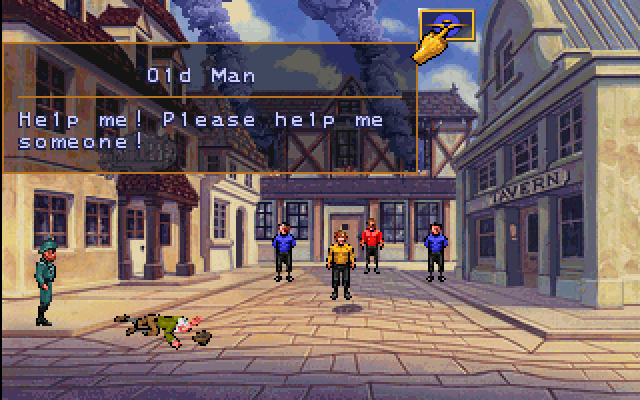
The system is not without friction. Some puzzle solutions demand a very specific order of operations that the game does not communicate clearly. If you attempt to open a door before scanning its locking mechanism first, the game might fail the action without explaining why, forcing you to cycle through every crew member's item menu to find the single trigger you overlooked.
The defining feature of this release is its complete vocal performance. Released for MS-DOS, this full CD-ROM edition features digitized voice work from every core original series actor: William Shatner, Leonard Nimoy, DeForest Kelley, James Doohan, George Takei, Nichelle Nichols, and Walter Koenig. William Campbell even returned to voice Trelane. Hearing Shatner deliver Kirk's hesitant cadences and Kelley grumble through McCoy's dialogue turns standard text boxes into authentic theatrical scenes.
Audio design pulled heavily from original studio sound libraries, routed through Sound Blaster sound cards to output authentic bridge bleeps, warp engine hums, and phaser blasts. Richard Band and Rick Jackson composed an orchestral score that matches the dramatic swells of sixties television music. This CD release marks the final production where the entire original cast recorded together, making it DeForest Kelley's last voice performance as Dr. McCoy before his passing.
The Limited CD-ROM Collector's Edition packaging reflected that milestone with physical extras. Interplay shipped it in a numbered box alongside a collectible pin, a full manual, a VHS tape containing classic television episodes, and a dedicated "Making of" CD hosted by Leonard Nimoy featuring interviews with series creator Gene Roddenberry.
Space encounters in the previous title, 25th Anniversary, infuriated players who wanted story puzzles without wrestling mouse-driven dogfight flight physics. Interplay addressed those complaints directly here. While you still sit in the Enterprise helm seat to manage shields, photon torpedoes, and phaser banks against hostile starships, the developers added menu options to lower tactical difficulty or bypass ship combat entirely.
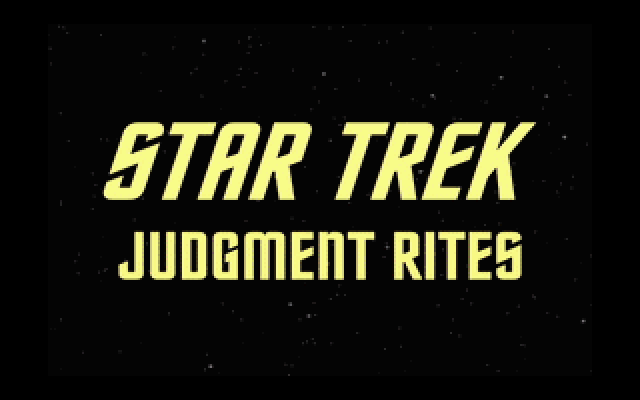
For those who keep combat active, battles demand strategic power management rather than lightning reflexes. You route energy between impulse engines, tactical shields, and weapons banks while maneuvering to keep enemy ships within your forward firing arc. It remains slightly awkward on standard keyboards, but turning down the combat slider allows pure adventure fans to enjoy the story uninterrupted.
The floppy disk release of the game had featured an optional "Movie and Sound Pack" with rendered 3D cutscenes, including a Brassican ship morphing into a giant head and detailed ship explosions. While those extra renders were omitted from the main MS-DOS CD release, the core tactical bridge sequences and main story cutscenes remain intact and fully voiced.
If you want to play a classic 1995 release from Interplay Entertainment Corp., this sci-fi adventure holds up better than most. The puzzle design gives you fair hints, the episodic writing stays tight, and the vocal work from the original cast carries every scene. Anyone who enjoys point-and-click mechanics combined with authentic sci-fi storytelling will find hours of solid tactical decisions here.
You can play Star Trek: Judgment Rites free in your browser right now on this page. If you want a great introduction to this Star Trek: Judgment Rites MS-DOS game, start by opening the first mission and using Spock to scan every anomaly before you interact with planetary consoles. You can play Star Trek: Judgment Rites online immediately with full sound and voice support ready to go.
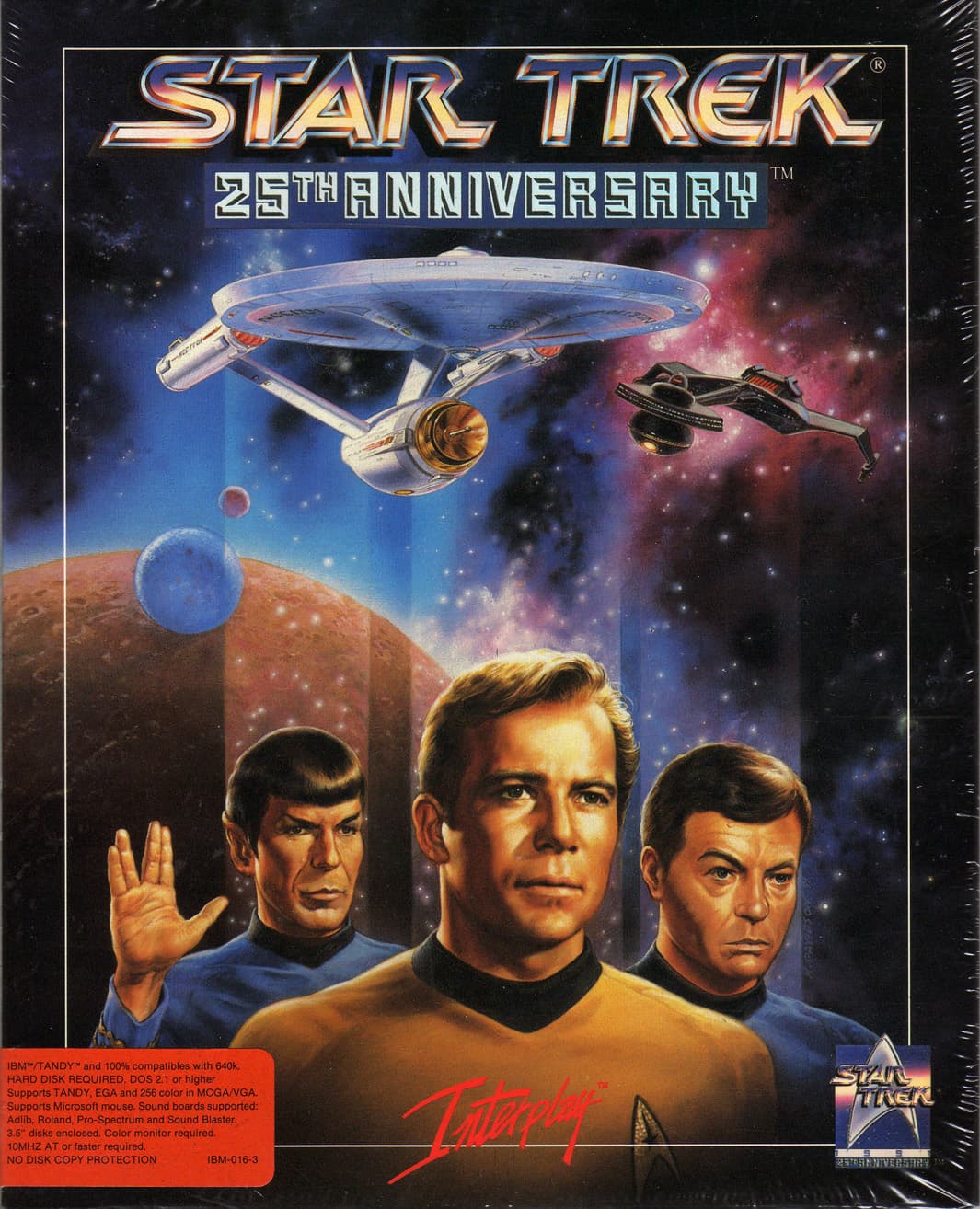
Star Trek: Judgment Rites hands you the keys to the USS Enterprise across eight distinct episodes, pairing authentic original cast performances with point-and-click planetary investigation. It gives you full control of Kirk, Spock, and McCoy as you solve spatial anomalies, negotiate with erratic god-like entities, and decide when to set phasers to stun.
Interplay Entertainment Corp. built this sequel on the exact structural rhythm of classic television. Instead of dragging one thin plot across ten hours, the narrative breaks into separate, self-contained assignments like "Federation", "Sentinel", "No Man's Land", "Light and Darkness", and "Yet There's Method in It". Each assignment feels like a lost hour from the original broadcast run, complete with landing party selection, shipboard briefing scenes, and diplomatic tension that can end in combat if you handle negotiations poorly.
The writing team included scenario designers such as Michael A. Stackpole, Scott Bennie, Mark O'Green, and Liz Danforth alongside lead designers Bruce Schlickbernd and Jayesh J. Patel. Their approach treats every member of the landing party as a tool for problem-solving. Spock analyzes alien machinery with logical deduction, McCoy offers medical diagnoses and cynical commentary, while generic security redshirts exist primarily to demonstrate environmental hazards. The story logic rewards anyone who remembers how the show handled strange phenomena: scanning with a tricorder almost always yields practical clues rather than flavour text.
What makes these missions work is their willingness to embrace the absurdity of classic sci-fi tropes. One scenario forces the crew to deal with Trelane, the omnipotent child from the original series episode "The Squire of Gothos", who decides to dogfight the Enterprise while flying a World War I triplane through space. That balance between straight-faced protocol and outright bizarre scenarios keeps the pacing crisp across the whole campaign.
On planet surfaces, gameplay follows traditional adventure mechanics driven by direct icon interaction. You select your crew member, choose an action like scan, talk, or use, and apply tools directly to items in the environment. Success demands rigorous observation, because missing a single interactive object on a alien landscape will stall your entire team. A quick scan with the tricorder often reveals hidden power conduits or computer terminals, but you still have to pixel-hunt across detailed background art to find the exact node to repair.
Puzzles rely on hard logic and Trek lore rather than inventory combination nonsense. You will translate alien languages, re-wire power grids, and calibrate frequency modulators. When a planetary computer system locks down, you do not use a rubber chicken on a pulley; you use Spock to probe the logic gates or McCoy to check bio-readings. The game strictly enforces away-team discipline: firing a phaser at a non-hostile alien brings an instant reprimand from Starfleet Command and a lowered mission score.
The system is not without friction. Some puzzle solutions demand a very specific order of operations that the game does not communicate clearly. If you attempt to open a door before scanning its locking mechanism first, the game might fail the action without explaining why, forcing you to cycle through every crew member's item menu to find the single trigger you overlooked.
The defining feature of this release is its complete vocal performance. Released for MS-DOS, this full CD-ROM edition features digitized voice work from every core original series actor: William Shatner, Leonard Nimoy, DeForest Kelley, James Doohan, George Takei, Nichelle Nichols, and Walter Koenig. William Campbell even returned to voice Trelane. Hearing Shatner deliver Kirk's hesitant cadences and Kelley grumble through McCoy's dialogue turns standard text boxes into authentic theatrical scenes.
Audio design pulled heavily from original studio sound libraries, routed through Sound Blaster sound cards to output authentic bridge bleeps, warp engine hums, and phaser blasts. Richard Band and Rick Jackson composed an orchestral score that matches the dramatic swells of sixties television music. This CD release marks the final production where the entire original cast recorded together, making it DeForest Kelley's last voice performance as Dr. McCoy before his passing.
The Limited CD-ROM Collector's Edition packaging reflected that milestone with physical extras. Interplay shipped it in a numbered box alongside a collectible pin, a full manual, a VHS tape containing classic television episodes, and a dedicated "Making of" CD hosted by Leonard Nimoy featuring interviews with series creator Gene Roddenberry.
Space encounters in the previous title, 25th Anniversary, infuriated players who wanted story puzzles without wrestling mouse-driven dogfight flight physics. Interplay addressed those complaints directly here. While you still sit in the Enterprise helm seat to manage shields, photon torpedoes, and phaser banks against hostile starships, the developers added menu options to lower tactical difficulty or bypass ship combat entirely.
For those who keep combat active, battles demand strategic power management rather than lightning reflexes. You route energy between impulse engines, tactical shields, and weapons banks while maneuvering to keep enemy ships within your forward firing arc. It remains slightly awkward on standard keyboards, but turning down the combat slider allows pure adventure fans to enjoy the story uninterrupted.
The floppy disk release of the game had featured an optional "Movie and Sound Pack" with rendered 3D cutscenes, including a Brassican ship morphing into a giant head and detailed ship explosions. While those extra renders were omitted from the main MS-DOS CD release, the core tactical bridge sequences and main story cutscenes remain intact and fully voiced.
If you want to play a classic 1995 release from Interplay Entertainment Corp., this sci-fi adventure holds up better than most. The puzzle design gives you fair hints, the episodic writing stays tight, and the vocal work from the original cast carries every scene. Anyone who enjoys point-and-click mechanics combined with authentic sci-fi storytelling will find hours of solid tactical decisions here.
You can play Star Trek: Judgment Rites free in your browser right now on this page. If you want a great introduction to this Star Trek: Judgment Rites MS-DOS game, start by opening the first mission and using Spock to scan every anomaly before you interact with planetary consoles. You can play Star Trek: Judgment Rites online immediately with full sound and voice support ready to go.
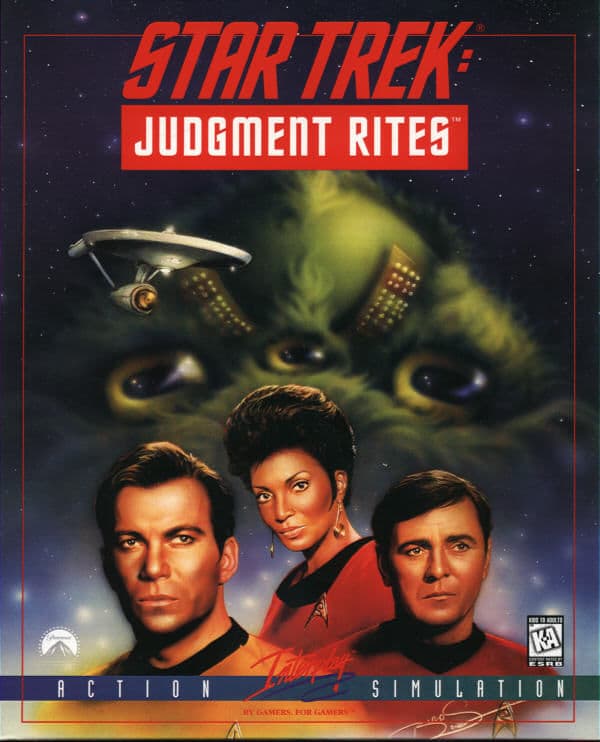
How Star Trek: Judgment Rites (Limited CD-ROM Collector's Edition) is played — the keys the game listens to, grouped by what they do.
Highlighted keys are mapped — hover or tap one to see what it does.
The key map is incomplete as full ground movement and save/pause hotkeys were not present in the reference material. Space combat difficulty can be adjusted or disabled at start.
The on-screen keyboard and gamepad mapping the browser player uses on a phone, a tablet or a controller, as opposed to the real keys above. $PRO members make their own in the player and share them here; anyone can pick one to play with.
Cheat codes, console commands and memory pokes for Star Trek: Judgment Rites (Limited CD-ROM Collector's Edition) — each one verified and attributed.
Sign in to submitHow Star Trek: Judgment Rites (Limited CD-ROM Collector's Edition) is played — the keys the game listens to, grouped by what they do.
Highlighted keys are mapped — hover or tap one to see what it does.
The key map is incomplete as full ground movement and save/pause hotkeys were not present in the reference material. Space combat difficulty can be adjusted or disabled at start.
The on-screen keyboard and gamepad mapping the browser player uses on a phone, a tablet or a controller, as opposed to the real keys above. $PRO members make their own in the player and share them here; anyone can pick one to play with.
Cheat codes, console commands and memory pokes for Star Trek: Judgment Rites (Limited CD-ROM Collector's Edition) — each one verified and attributed.
Sign in to submit
Star Trek: Judgment Rites (Limited CD-ROM Collector's Edition)1995 · this page