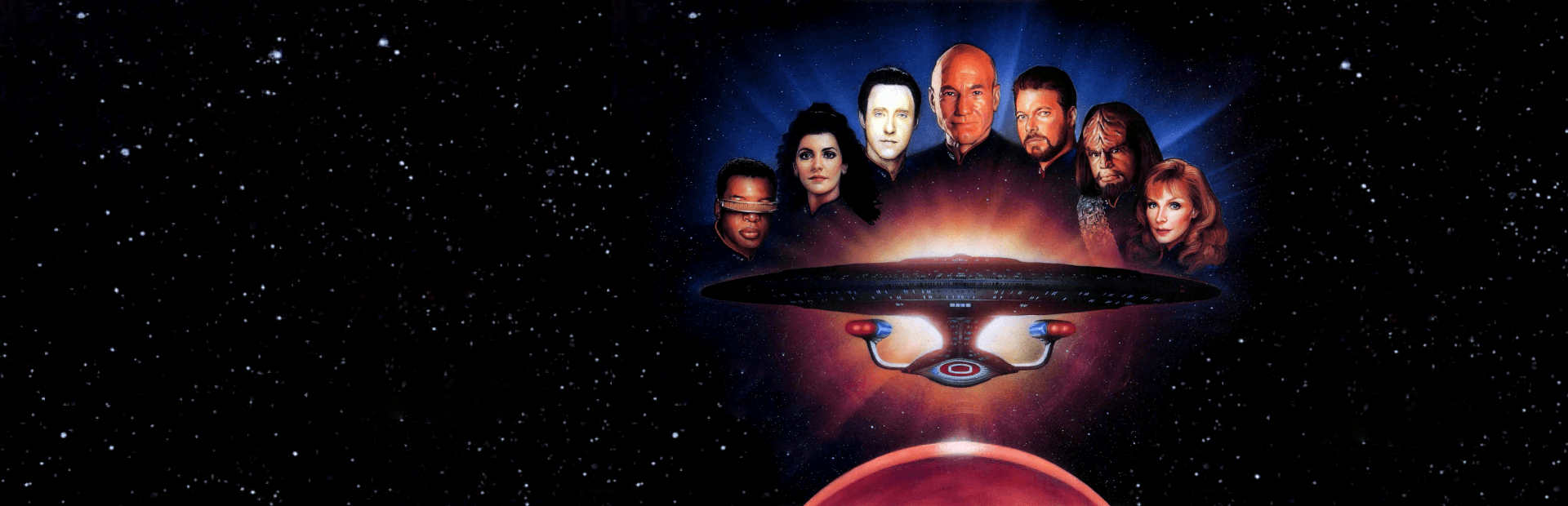
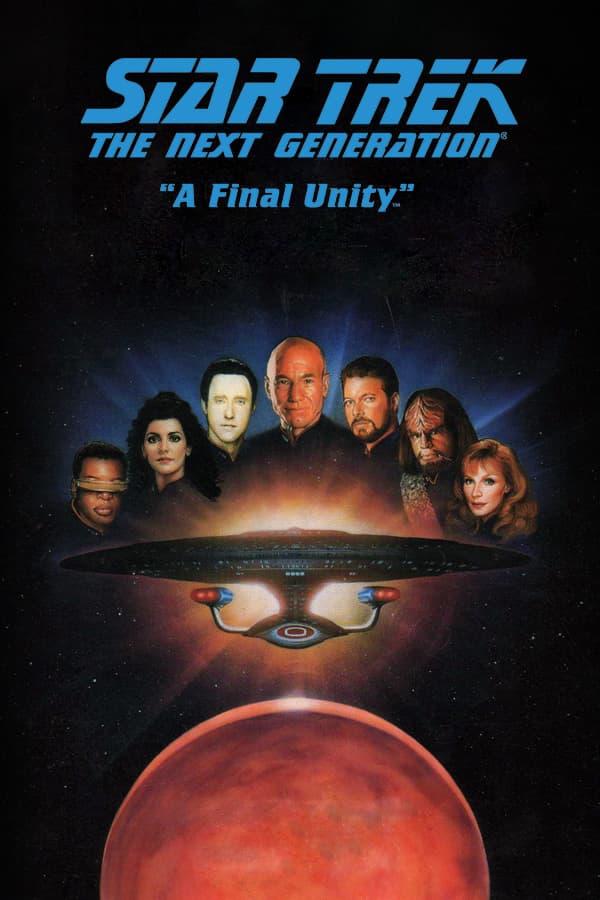
When Star Trek: The Next Generation - A Final Unity arrived on CD-ROM in 1995, it handed players the full bridge of the Enterprise-D, complete with the actual voices of Patrick Stewart and the television cast.
Most licensed sci-fi games from the mid-1990s gave you a simple arcade shooter wrapped in movie clips. Spectrum HoloByte took the opposite path by delivering a hybrid adventure game that asks you to actually command a Starfleet flagship. You sit in Picard's chair, open the stellar cartography map, pick coordinates, and order your crew to set course. When a distress call comes in from a station on Mertens, you decide whether to jump straight there or investigate suspicious sensor readings on the way.
The core narrative feels straight out of an extended episode from the later television seasons. A group of Garidian refugees crosses the Neutral Zone in a desperate escape, drawing the crew into a multi-faction race against Romulans and the ancient Chodak for five lost scrolls. These artifacts point toward the Unity Device, a cosmic machine with the power to alter reality. Writing credits include television series veteran Naren Shankar alongside authors Stephen Goldin, Kyle Brink, Vera Chan, and Joe Ward, which explains why the dialogue flows so naturally from the cast.
When you drop an away team onto planets like Morassia, Frigis, or Horst III, the game shifts to a classic third-person point-and-click perspective. You pick four crew members for each landing party, using their specific skills and gear to solve local problems:
The smartest design choice in the game is letting you delegate complex duties to your bridge officers. If you do not want to micromanage shield frequencies and phaser power allocation during ship engagements, you can hand tactical control directly to Worf and let him fight off a Garidian Warbird. If energy distribution across main engines gets tedious, Geordi will happily balance the warp core for you. This structure leaves you free to focus on diplomatic choices, dialogue trees, and planetary investigations.
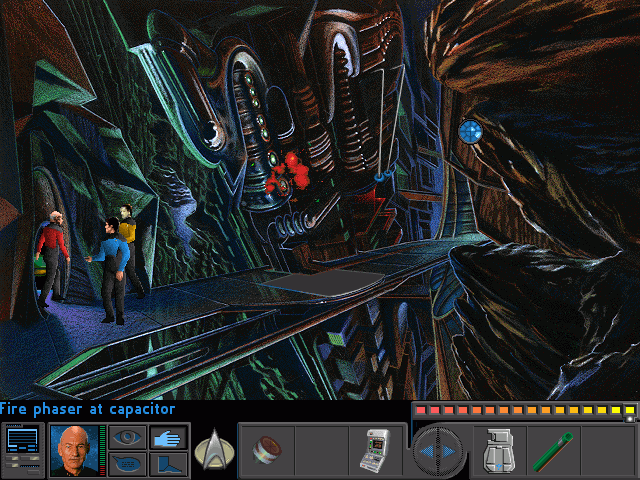
Away team missions, however, run into traditional mid-nineties adventure traps. Planetary environments on worlds such as Allanor and Shanok use high-resolution pre-rendered backdrops where crucial puzzle items hide right in the artwork. You will frequently find yourself sweeping your cursor across every single screen corner searching for a tiny interactive panel or a missing tool.
The logic behind planetary puzzles usually makes sense within Starfleet regulations, but the logistics get heavy. If you bring Worf, Geordi, and Data to a site only to discover you need Crusher to analyze a biological sample, you cannot simply swap crew on the fly. You have to walk back to the beam-down site, transport up to the ship, reconfigure your landing party, and beam back down. That round trip quickly turns simple inventory testing into an exercise in patience.
Space combat was built on full 3D tactical movement, which was ambitious for an adventure title in 1995. When it works, balancing phaser banks, photon torpedoes, and shield facings feels authentic to the show. You can manually target enemy subsystems to disable engines or weapons instead of outright destroying hostile vessels, fitting Starfleet's diplomatic approach. If you find yourself struggling on the tactical bridge view, typing makeitso enables a built-in cheat mode for immediate assistance.
The tactical grid carries a steep learning curve. Controlling pitch, roll, speed, and target locks on a keyboard or mouse at the same time is clunky and slow. In full manual mode, enemy ships fly circles around you while you scramble through sub-menus trying to redirect auxiliary power to forward shields. Most players end up leaving Worf in charge of combat entirely, treating space battles as cinematic scenes where the tactical officer handles the heavy lifting.
Production on the title was massive for its day. Spectrum HoloByte originally demonstrated an early version at the February 1993 Consumer Electronics Show with isometric graphic movement. The development team later overhauled the entire project into a full point-and-click adventure with digitized speech. Development delays pushed the release past 1994 and into mid-1995, months after the television series had already aired its series finale. Having the complete original cast record hundreds of lines of voice acting gave the game a real authority that few sci-fi games of the time could match.
Compared to other 1995 space titles, this game holds a distinct middle ground. It lacks the fast space dogfighting of Wing Commander III, and its ground puzzles are far more rigid than contemporary LucasArts titles like The Dig. What it nails better than any rival is the actual atmosphere of running a galaxy-class starship. Paul Mogg's musical score reproduces the television audio landscape perfectly, down to the hum of the warp drive in the background.
The inventory hunting can drag and the tactical grid remains confusing, but the strong writing carries the adventure across its seven distinct sectors. Being able to access computer LCARS databases, research planet histories, and talk your way through diplomatic standoffs makes it feel like an authentic missing season of the show. It is a slow, methodical title built for people who want to think like a captain rather than just shoot aliens.
You can play Star Trek: The Next Generation - A Final Unity online free in your browser right now, with no installation or complex system configuration required. Hand tactical command straight to Worf, keep your tricorder handy on away missions, and enjoy one of the best written Trek stories of the nineties desktop era.
When Star Trek: The Next Generation - A Final Unity arrived on CD-ROM in 1995, it handed players the full bridge of the Enterprise-D, complete with the actual voices of Patrick Stewart and the television cast.
Most licensed sci-fi games from the mid-1990s gave you a simple arcade shooter wrapped in movie clips. Spectrum HoloByte took the opposite path by delivering a hybrid adventure game that asks you to actually command a Starfleet flagship. You sit in Picard's chair, open the stellar cartography map, pick coordinates, and order your crew to set course. When a distress call comes in from a station on Mertens, you decide whether to jump straight there or investigate suspicious sensor readings on the way.
The core narrative feels straight out of an extended episode from the later television seasons. A group of Garidian refugees crosses the Neutral Zone in a desperate escape, drawing the crew into a multi-faction race against Romulans and the ancient Chodak for five lost scrolls. These artifacts point toward the Unity Device, a cosmic machine with the power to alter reality. Writing credits include television series veteran Naren Shankar alongside authors Stephen Goldin, Kyle Brink, Vera Chan, and Joe Ward, which explains why the dialogue flows so naturally from the cast.
When you drop an away team onto planets like Morassia, Frigis, or Horst III, the game shifts to a classic third-person point-and-click perspective. You pick four crew members for each landing party, using their specific skills and gear to solve local problems:
The smartest design choice in the game is letting you delegate complex duties to your bridge officers. If you do not want to micromanage shield frequencies and phaser power allocation during ship engagements, you can hand tactical control directly to Worf and let him fight off a Garidian Warbird. If energy distribution across main engines gets tedious, Geordi will happily balance the warp core for you. This structure leaves you free to focus on diplomatic choices, dialogue trees, and planetary investigations.
Away team missions, however, run into traditional mid-nineties adventure traps. Planetary environments on worlds such as Allanor and Shanok use high-resolution pre-rendered backdrops where crucial puzzle items hide right in the artwork. You will frequently find yourself sweeping your cursor across every single screen corner searching for a tiny interactive panel or a missing tool.
The logic behind planetary puzzles usually makes sense within Starfleet regulations, but the logistics get heavy. If you bring Worf, Geordi, and Data to a site only to discover you need Crusher to analyze a biological sample, you cannot simply swap crew on the fly. You have to walk back to the beam-down site, transport up to the ship, reconfigure your landing party, and beam back down. That round trip quickly turns simple inventory testing into an exercise in patience.
Space combat was built on full 3D tactical movement, which was ambitious for an adventure title in 1995. When it works, balancing phaser banks, photon torpedoes, and shield facings feels authentic to the show. You can manually target enemy subsystems to disable engines or weapons instead of outright destroying hostile vessels, fitting Starfleet's diplomatic approach. If you find yourself struggling on the tactical bridge view, typing makeitso enables a built-in cheat mode for immediate assistance.
The tactical grid carries a steep learning curve. Controlling pitch, roll, speed, and target locks on a keyboard or mouse at the same time is clunky and slow. In full manual mode, enemy ships fly circles around you while you scramble through sub-menus trying to redirect auxiliary power to forward shields. Most players end up leaving Worf in charge of combat entirely, treating space battles as cinematic scenes where the tactical officer handles the heavy lifting.
Production on the title was massive for its day. Spectrum HoloByte originally demonstrated an early version at the February 1993 Consumer Electronics Show with isometric graphic movement. The development team later overhauled the entire project into a full point-and-click adventure with digitized speech. Development delays pushed the release past 1994 and into mid-1995, months after the television series had already aired its series finale. Having the complete original cast record hundreds of lines of voice acting gave the game a real authority that few sci-fi games of the time could match.
Compared to other 1995 space titles, this game holds a distinct middle ground. It lacks the fast space dogfighting of Wing Commander III, and its ground puzzles are far more rigid than contemporary LucasArts titles like The Dig. What it nails better than any rival is the actual atmosphere of running a galaxy-class starship. Paul Mogg's musical score reproduces the television audio landscape perfectly, down to the hum of the warp drive in the background.
The inventory hunting can drag and the tactical grid remains confusing, but the strong writing carries the adventure across its seven distinct sectors. Being able to access computer LCARS databases, research planet histories, and talk your way through diplomatic standoffs makes it feel like an authentic missing season of the show. It is a slow, methodical title built for people who want to think like a captain rather than just shoot aliens.
You can play Star Trek: The Next Generation - A Final Unity online free in your browser right now, with no installation or complex system configuration required. Hand tactical command straight to Worf, keep your tricorder handy on away missions, and enjoy one of the best written Trek stories of the nineties desktop era.
aka Star Trek: The Next Generation - "A Final Unity"
How Star Trek: The Next Generation - A Final Unity is played — the keys the game listens to, grouped by what they do.
Highlighted keys are mapped — hover or tap one to see what it does.
SETUP.EXE must be run to configure sound and display drivers properly under DOS.
The on-screen keyboard and gamepad mapping the browser player uses on a phone, a tablet or a controller, as opposed to the real keys above. $PRO members make their own in the player and share them here; anyone can pick one to play with.
Cheat codes, console commands and memory pokes for Star Trek: The Next Generation - A Final Unity — each one verified and attributed.
Sign in to submitHow Star Trek: The Next Generation - A Final Unity is played — the keys the game listens to, grouped by what they do.
Highlighted keys are mapped — hover or tap one to see what it does.
SETUP.EXE must be run to configure sound and display drivers properly under DOS.
The on-screen keyboard and gamepad mapping the browser player uses on a phone, a tablet or a controller, as opposed to the real keys above. $PRO members make their own in the player and share them here; anyone can pick one to play with.
Cheat codes, console commands and memory pokes for Star Trek: The Next Generation - A Final Unity — each one verified and attributed.
Sign in to submit
Star Trek: The Next Generation - A Final Unity1995 · this page