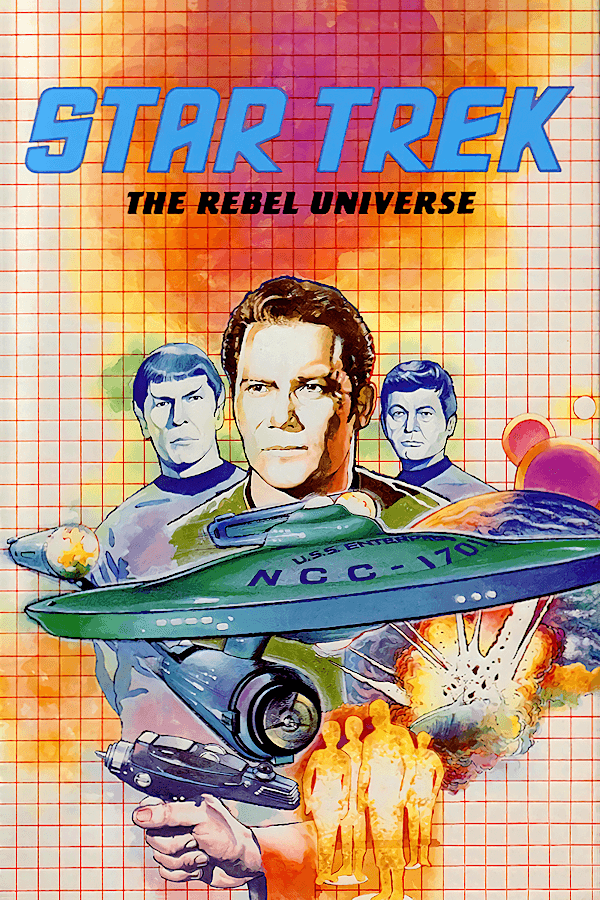

When you load Star Trek: The Rebel Universe, you take direct command of the USS Enterprise bridge crew to untangle a sector-wide mutiny before Starfleet seals the entire Quarantine Zone inside an inescapable force field.
The premise behind Star Trek: The Rebel Universe puts you right on the bridge
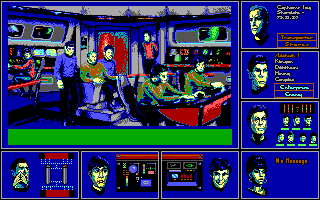
Most licensed games from the late eighties treated their source material like a cheap coat of paint pasted over a standard arcade clone, but game designer Mike Singleton took a completely different path here. Instead of forcing Captain Kirk into an action platformer, this ambitious project puts you in front of seven distinct bridge consoles where every main character performs a specific job. You open Sulu's station to rotate a 3D tactical map across hundreds of star systems, switch to Spock to analyze planetary atmosphere data, and drop into Scotty's panel to manage precious dilithium reserves while monitoring power distribution.
The core setup gives you a real reason to pay attention. Federation starships entering the Sagittarius Arm have systematically turned coat and joined forces with the Klingons, prompting Starfleet Command to deploy a massive energy barrier called the Klein Sphere to quarantine the area forever. Your job during this five-year mission is to breach the zone, pinpoint the source of the mind-altering Klingon Psi-beam network, and find a way to disable the barrier before it shuts permanently. Success requires balancing survival mechanics with broad deep-space navigation, turning the whole endeavor into a strategy tactics adventure where information matters far more than fast reflexes.
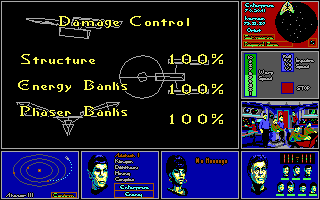
Execution on the bridge relies on a structured sequence of operational commands:
- Sulu: Navigates the galaxy using a 3D star map to plot sub-light and warp trajectories.
- Spock: Scans target star systems and planets to determine radiation levels and point out anomalous tactical items.
- Chekov: Manages real-time ship combat, controlling phaser arrays and tracking a strict supply of 50 photon torpedoes.
- Scotty: Monitors engine output, repairs system damage, and tracks remaining dilithium crystals.
- Kirk: Coordinates landing parties and transporter operations when orbiting hostile or unknown worlds.
Mike Singleton designed a sprawling galaxy that eventually drags
When you drop into a system, exploration means picking a planet, establishing orbit, and using Kirk's transporter console to beam down selected crew members. Surface missions operate like inventory-based puzzles where you locate critical alien hardware to bypass hazards or gain tactical advantages. You might find a Cerenkov Crystal or a Chaff Emitter on one world, then realize you need a Logic Emitter, a Solar Scan Device, or specific Klingon and Romulan Jammers to safely explore the next. The game even includes non-linear puzzle design, offering eight to ten different ways to resolve the overall crisis, ranging from diplomatic maneuvering to outright blackmailing a Klingon Admiral.
The sheer scale of the galaxy is matched by small, odd touches hidden throughout the star maps. The manual backstory lays out an entire theater of operations filled with subtle jokes, naming planetary bodies things like Quaggle Frack and Mors Minoris. Yet despite these clever details, the minute-to-minute routine wears thin long before you reach a solution. Period reviews in magazine outlets like COMPUTE! applauded the sleek icon-driven layout while rightly pointing out the unexpected tediousness of play that sets in once you realize how many barren worlds you have to visit.
Movement itself contributes to the exhaustion. Steering the ship during real-time combat against intercepting Klingon and Romulan battlecruisers feels heavy, giving the impression that you are piloting a shuttle through molasses. Combined with a steep learning curve that leaves players baffled without a printed manual, the experience can quickly turn into a grueling exercise in trial and error.
What the 1987 MS-DOS port lost along the way
Originally designed for the 16-bit Atari ST, this title was published by Simon & Schuster Interactive as part of a push into home computer software from 1987 onward. Bringing the game over to standard IBM PC compatibles required significant graphical compromises. Where the original ST presentation looked sharp and bright, the conversion to PC displays flattened the color palette and simplified the visual feedback during space encounters, making planetary orbits look noticeably drabber.
Audio took an even bigger hit depending on your home setup. While Commodore 64 owners got to listen to a full SID chip rendition of the original TV theme arranged by musician Julie Dunn, PC owners relying on a standard internal speaker were treated to harsh single-tone beeps during combat and menu selections. Even with a sound card installed, the PC version could not match the atmospheric audio work David Whittaker put into the original 16-bit release, making the vast empty sectors feel even more isolated than intended.
You can play Star Trek: The Rebel Universe in your browser today
The bridge management system holds up as a fascinating design experiment, even if the slow flight speed and repetitive planetary landings prove frustrating over a long session. If you want to sample this piece of sci-fi gaming history, you can play Star Trek: The Rebel Universe free in your browser right now with no setup required. Jump into Sulu's star map, keep a close eye on your torpedo counts during your first Romulan encounter, and see if you can solve the mutiny before the Klein Sphere locks you in forever.