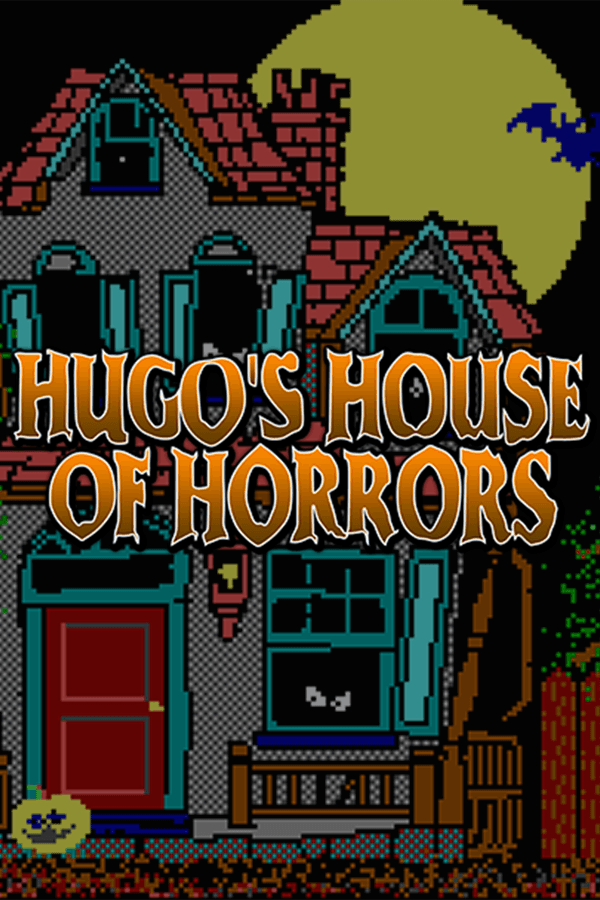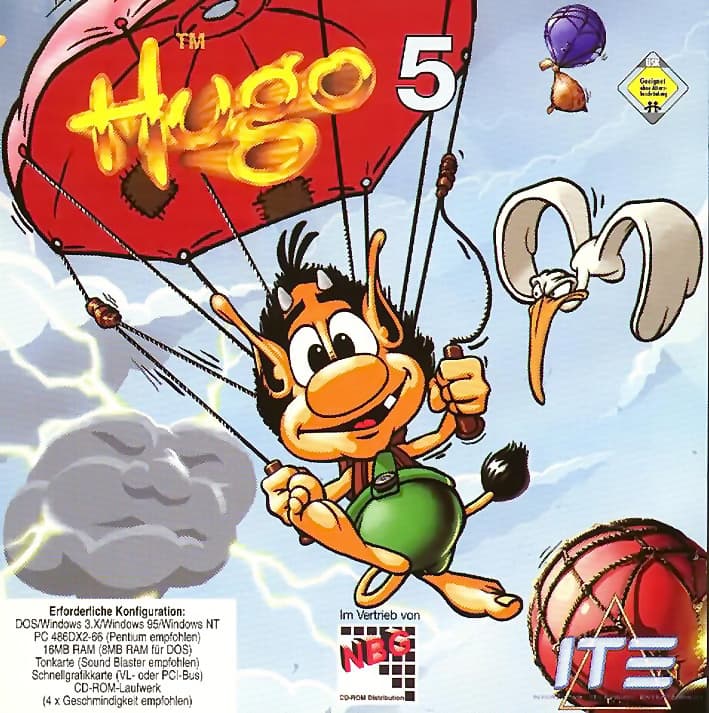
Playing Hugo 5 feels like being retroactively thrust onto 1990s Scandinavian television, shouting at your phone while a digital troll dodges giant boulders.
The television screen arrives in the MS-DOS era
Before Hugo 5 hit personal computers, the little troll was the undisputed king of live interactive television across Europe. Developed and published by ITE Media ApS, the concept relied on viewers using their landline telephone keypads to control a live animated character on screen. Transferring that frantic input latency to a native action game on the PC meant preserving the strict, rhythmic timing that made the broadcast version famous. You do not get smooth, continuous physics here; you get precise, grid-based button prompt responses wrapped in cartoon animation.
The core setup in Hugo 5 remains true to the television show pitch. The evil witch Scylla has snapped up Hugo's wife, Hugolina, along with their children, leaving Hugo to traverse a gauntlet of deadly environments to rescue them. Production manager Ivan Sølvason and his team assembled a title structured around picking three minigames before pushing into a high-stakes final stage. The graphics team, including artists like Lars Krogh Mortensen and Esben Toft Jacobsen, brought bright, expressive animations to life, while programmers Jakob Frandsen and Bo Krohn ensured the PC code mimicked the sudden hazard prompts of the original studio hardware.
Four cruel minigames and a ruthless endgame prompt
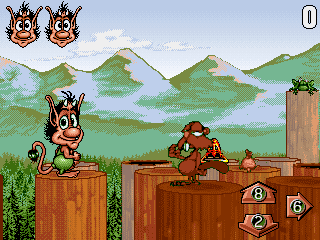
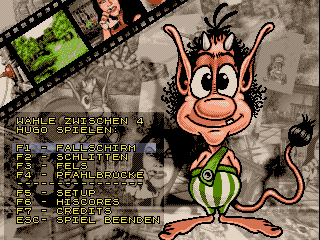
Every run requires navigating a gauntlet of tailored setpieces. The game offers four main stages to sample: Parachute, Sleigh Ride, Climbing, and Pile Bridge. In the Parachute level, Hugo drifts downward, avoiding birds and stormy hazards where a single late turn sends him plummeting. Sleigh Ride forces you to react to sudden drops and obstacles on a frozen track, demanding fast reflexes to switch lanes before Scylla’s traps catch you off guard.
Climbing and Pile Bridge focus heavily on memory and spatial awareness. On the cliffside, rolling rocks and crumbling ledges cut off your path, while the wooden bridge forces you to leap over gaps and avoid traps under heavy time pressure. Once you clear three chosen stages, you enter the endgame scenario. Whether you land on Ropes, Key, or the infamous lightning grid, your victory depends entirely on a split-second decision. Guess the wrong rope or step on the wrong tile, and Scylla instantly blasts Hugo out of the lair, forcing a complete restart from the very beginning.
Why the tight timing still infuriates modern players
The design of 1997 minigame compilations often favored brutal trial-and-error over forgiving mechanics, and this release is no exception. Because the input scheme was originally mapped to landline button commands, there is virtually no momentum adjustment mid-jump. Hesitating for half a second on the Sleigh Ride or misjudging a ledge jump on the Pile Bridge instantly burns one of your lives. The sound team, led by Mads Kristensen and David Filskov, paired these abrupt failures with loud, mocking sound effects from Scylla that make every mistake burn.
Difficulty in this ITE Media ApS title is further compounded by its sheer lack of checkpoints. You either pull off a flawless run across all three chosen stages and solve the final endgame puzzle, or you watch the game-over screen roll. Players coming back to it today often mention how narrow the margins are. If your reaction speed slips on the Parachute descent, you will not make it far enough to even see the final rope choice.
- Parachute stage: Dodge overhead hazards and air currents during a controlled descent.
- Sleigh Ride: Quick lane-shifting and jumping across icy paths.
- Climbing: Vertical pathfinding while dodging falling rocks and weak footholds.
- Pile Bridge: Precision leaping over stepping stones and river traps.
- Endgame Scenarios: High-stakes luck and memory tests featuring Ropes, Key, and Lightning.
Give Hugo 5 a spin in your browser
If you miss typing commands into a home computer or watching phone-in TV shows after school, this collection serves up immediate arcade tension. Hugo’s animations still look sharp and lively, even if the ruthless hazard placement will test your patience. It gives you a clear look at late nineties gaming culture, right when phone-controlled TV broadcasts were moving onto home desktop monitors.
You can run this full MS-DOS classic right now without setting up old config files or hunting down original floppies. It takes only a moment to load up, giving you instant access to the exact brand of fast-paced timing traps that stressed out kids decades ago. Pick your three minigames, keep your fingers ready on the directional keys, and see if you can finally beat Scylla to save Hugolina today.