Hugo II: Whodunit?
In Hugo II: Whodunit?, a quiet weekend at Great Uncle Horace's country house unravels the second you look through a bedroom keyhole and watch the old man get stabbed to death.
Stepping into a murder mystery with 16-color EGA graphics
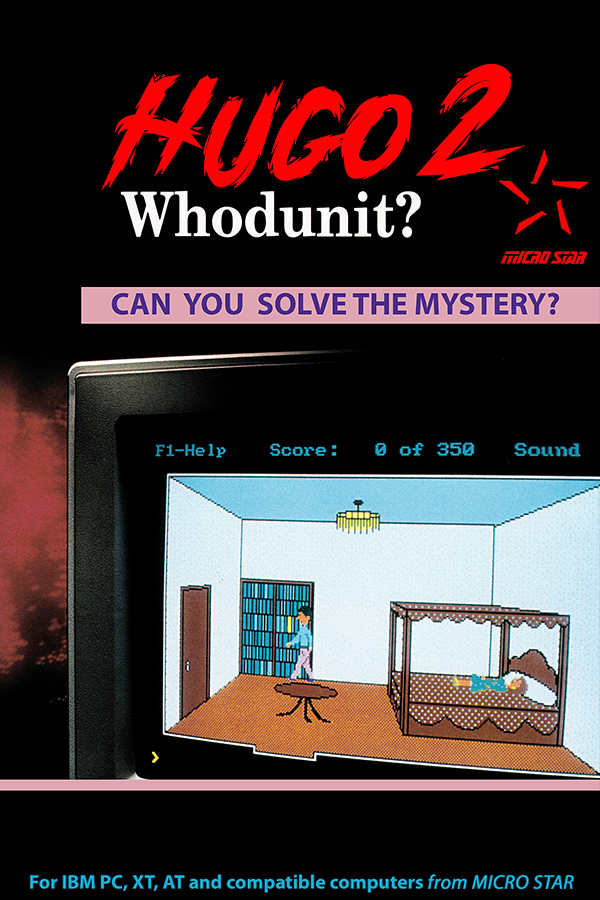
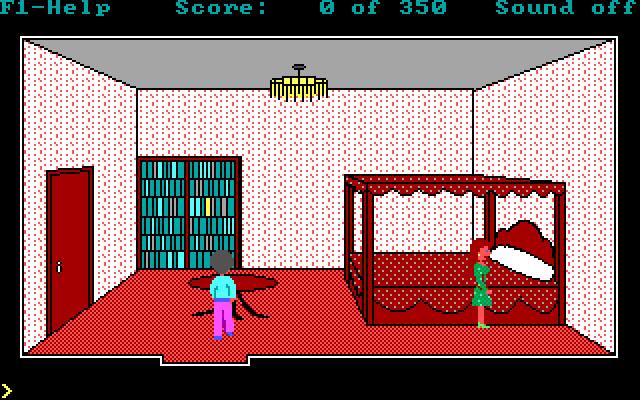
You begin in the guest bedroom as Penelope, who wakes up to find her husband Hugo missing after he accidentally triggered a hidden passage behind a bookcase. Looking through the keyhole reveals Uncle Horace falling to the floor, leaving you to investigate the estate, find out who struck him down, and rescue Hugo. Built in 320x200 EGA resolution with a 16-color palette, the game follows the early Sierra AGI layout where you steer your character with arrow keys and type commands into a text parser at the bottom of the screen.
Anyone who grew up typing LOOK AT ROOM into early parser titles will recognize the rhythms of this 1991 release. You navigate the mansion room by room, examining furniture and stuffing useful items like matches, a magnifying glass, and a yellow book into your pockets. Solo developer David P. Gray created his custom engine to deliver a lightweight shareware adventure game, and the low barrier to entry meant thousands of PC owners played it on home hardware that lacked dedicated sound cards.
When pixel precision meets dead-end puzzle design in Hugo II: Whodunit?
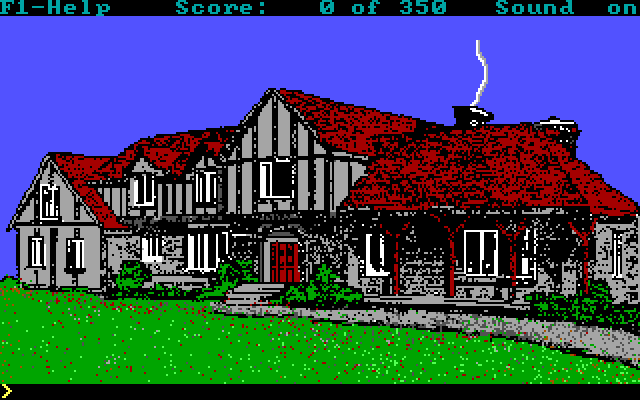
As you step outside the mansion into the garden screens, the puzzle logic takes several unpredictable turns. To bypass a lecherous gardener blocking your path, you have to find garlic and force Penelope to eat it so her breath turns him away. Further out, you encounter a stream with a bridge, a hedge maze, and a patch of killer Venus flytraps that punish slight missteps with instant death.
The movement collision is harsh. Crossing the log bridge or walking past the flytraps requires exact positioning, and a single wrong step dumps you into the water or into a fatal trap. Worse still, walking into the stream gets your matches wet without any immediate warning, letting you play for another half hour before discovering that an unlit dark cavern has left the game completely unwinnable.
That kind of unforgiving mechanic was common in 1991 design, but it forces frequent saves to survive. The puzzles alternate between straightforward inventory combinations and odd gag setups: player obstacles include:
- Eating garlic to repulse the creepy gardener blocking the grounds.
- Ducking into a yellow phone booth that suddenly teleports Penelope to an alien planet populated by a Dalek and a time traveler in a long scarf.
- Dealing with an annoying Old Man who insists on asking trivia by having Penelope simply bonk him over the head to proceed.
- Tracing a phone number on a riddle-printed balloon to make an essential call.
PC speaker squeaks, pop-culture cameos, and a twist ending
The audio presentation relies entirely on the internal PC speaker, which chirps single-note chimes for actions and blasts off-key synth tunes as you walk into new screens. There was no native sound card voice support in this DOS release, so every action sound effect is a screech or beep. The visuals maintain a five-frame-per-second animation walk cycle that makes Penelope look like she is gliding across the grass.
Despite the rigid parser and collision flaws, creator David Gray packed the screens with self-aware humor, including a cameo appearance by himself. When you finally reach the end of the mystery and assemble the clues, the story reveals that Uncle Horace was never actually murdered. He was merely rehearsing a dramatic play, turning the entire high-stakes rescue into a giant misunderstanding.
That slapstick resolution splits opinion among retro fans, but it matches the loose, unpretentious tone set by the original Hugo's House of Horrors. Grey Design later polished the trilogy for a 1995 commercial re-release under publisher Gray Design Associates, adding MIDI music tracks, mouse controls, and adjusting the maximum score from 190 to 200 points. However, the raw charm of the original shareware release rests in its original parser format.
Where the game lands today and how to play Hugo II: Whodunit?
If you want a fair challenge, this second chapter is both larger and more varied than its predecessor, even if the parser demands exact phrasing like USE GARLIC or READ BOOK. The dead-end traps and stiff character movement show their age, but solving the absurd puzzles and stumbling into sci-fi easter eggs keeps the pacing lively. It sits right alongside classic shareware adventures of the early nineties, offering an authentic slice of homebrew PC design.
You can play Hugo II: Whodunit? MS-DOS game releases directly without fussing over old hardware. You can play Hugo II: Whodunit? online right now, running Hugo II: Whodunit? free in your browser without needing to install custom configuration files or emulators. Just fire it up, keep a save file ready before you try crossing that garden log bridge, and remember to check your matches before stepping into the dark cavern.